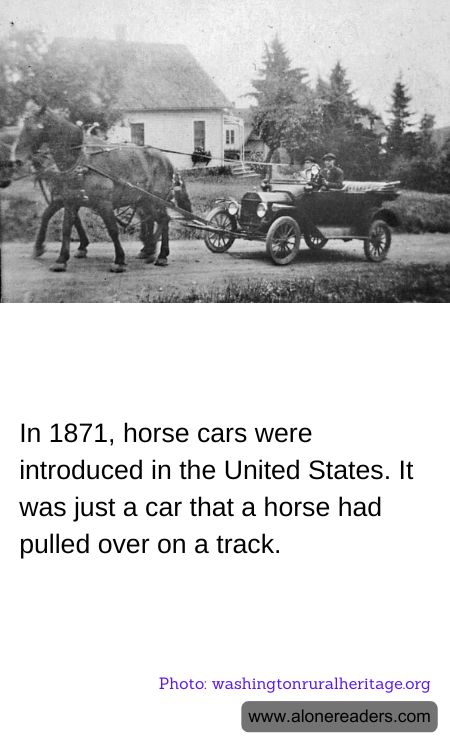
In the year 1871, a significant development in urban transportation took place in the United States with the introduction of horse cars. These horse-drawn vehicles, which ran on iron tracks, represented a pivotal moment in the evolution of public transit systems. As cities expanded and populations grew, the need for efficient and reliable transportation became increasingly apparent. Horse cars emerged as a solution, offering a more organized and smoother ride compared to the bumpy and often chaotic horse-drawn carriages that previously dominated city streets.
The concept of the horse car was relatively simple yet innovative for its time. Essentially, it was a streetcar that operated on tracks laid down on city streets, pulled by one or more horses. This system allowed for a more predictable and stable journey, as the tracks provided a clear path for the vehicles to follow. The introduction of horse cars marked a departure from the unstructured nature of earlier transportation methods, paving the way for more systematic urban planning and development.
Horse cars quickly gained popularity in major cities across the United States, including New York, Boston, and Philadelphia. They offered an affordable and accessible means of transportation for the masses, enabling people to travel greater distances within cities with ease. This newfound mobility had a profound impact on urban life, facilitating the growth of suburbs and allowing people to live further from their places of work. As a result, cities began to expand outward, and the daily commute became a common aspect of life for many Americans.
Despite their advantages, horse cars were not without their challenges. The reliance on horses meant that the system was limited by the animals' endurance and speed. Additionally, the upkeep of horses and the tracks required significant resources and labor. As cities continued to grow, the demand for more efficient transportation solutions increased, eventually leading to the development of electric streetcars and other forms of mechanized transit.
Nevertheless, the introduction of horse cars in 1871 was a crucial step in the evolution of public transportation. It demonstrated the potential for organized transit systems to transform urban environments and improve the quality of life for city dwellers. The legacy of horse cars can still be seen today in the form of modern streetcar systems and the continued emphasis on developing efficient and sustainable public transportation options.
In conclusion, the advent of horse cars in the United States marked a turning point in the history of urban transportation. By providing a more reliable and structured means of travel, they helped shape the development of cities and set the stage for future innovations in public transit. While the era of horse-drawn streetcars has long since passed, their impact on urban planning and transportation remains a testament to the ingenuity and adaptability of human societies in the face of growing urban challenges.
