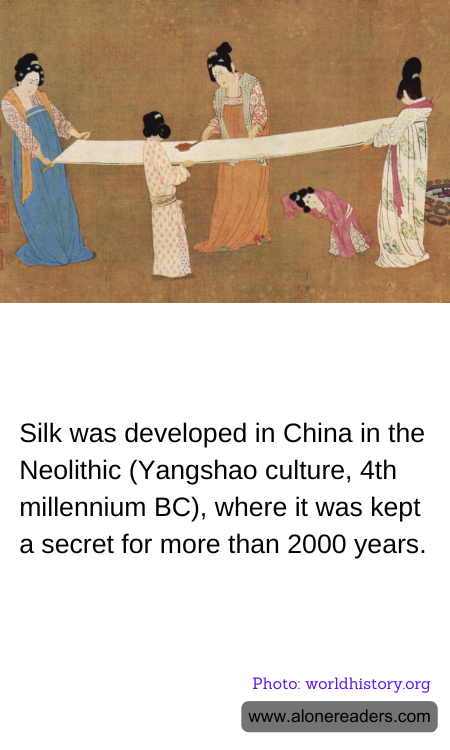
Silk, a fabric synonymous with luxury and elegance, has a history as rich and intricate as its texture. Its origins trace back to ancient China during the Neolithic period, specifically within the Yangshao culture around the 4th millennium BC. This remarkable discovery not only revolutionized textile production but also played a significant role in shaping the cultural and economic landscapes of ancient civilizations.
The story of silk begins with a legend that has been passed down through generations. It is said that Empress Leizu, the wife of the Yellow Emperor, discovered silk when a silkworm cocoon fell into her tea. As she watched, the heat unraveled the cocoon into a long, delicate thread. Fascinated by its strength and beauty, she began to weave it into fabric, thus laying the foundation for what would become one of China's most treasured industries.
For over two millennia, the Chinese guarded the secrets of silk production with unparalleled vigilance. The process of sericulture, which involves the cultivation of silkworms and the harvesting of their cocoons, was a closely held state secret. The Chinese understood the immense value of silk, not only as a commodity but also as a symbol of their ingenuity and craftsmanship. To ensure the monopoly on silk production, revealing the secrets of sericulture was punishable by death.
Silk quickly became a coveted material, prized for its softness, sheen, and versatility. It was used not only for clothing but also for art, writing, and even currency. The demand for silk extended far beyond China's borders, leading to the establishment of the Silk Road, a network of trade routes that connected the East to the West. This trade route facilitated cultural exchanges and the spread of ideas, making silk a catalyst for globalization long before the modern era.
Despite the Chinese efforts to keep silk production a secret, the allure of this luxurious fabric eventually led to its spread beyond China. By the 6th century AD, sericulture had reached Korea, Japan, and India, and later, the Byzantine Empire. The techniques of silk production gradually spread across the world, but the mystique and prestige of Chinese silk remained unmatched.
Today, silk continues to be a symbol of elegance and sophistication. Its journey from a closely guarded secret of the Yangshao culture to a global commodity is a testament to human curiosity and the desire for beauty. The legacy of silk is woven into the fabric of history, illustrating how a single discovery can transcend time and geography, leaving an indelible mark on the world.
