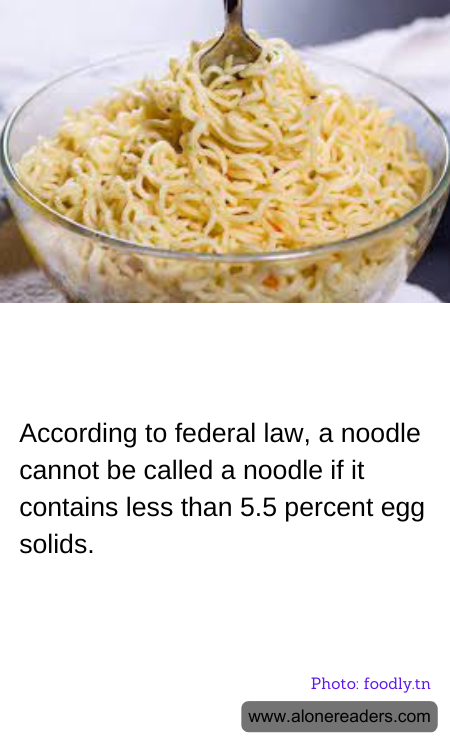
In the world of culinary delights, noodles hold a cherished place, offering a versatile base for countless dishes across various cultures. However, in the United States, the definition of what constitutes a noodle is not as simple as it might seem. According to federal law, a noodle cannot be labeled as such unless it contains at least 5.5 percent egg solids. This regulation, while seemingly trivial, plays a significant role in maintaining the authenticity and quality of noodles available to consumers.
The requirement for noodles to contain a minimum percentage of egg solids is rooted in the desire to preserve traditional recipes and ensure a certain standard of quality. Egg solids contribute to the texture, flavor, and nutritional value of noodles, distinguishing them from other pasta products. This distinction is crucial, as it helps consumers make informed choices about the products they purchase and consume. By enforcing this regulation, the government aims to protect consumers from misleading labeling and ensure that they receive a product that meets their expectations.
The history of this regulation dates back to the mid-20th century when the Food and Drug Administration (FDA) established standards of identity for various food products. These standards were designed to prevent manufacturers from using misleading names and to ensure that consumers received products that met specific criteria. For noodles, the inclusion of egg solids was deemed essential to maintain the traditional characteristics associated with this beloved food item.
While some may view this regulation as overly stringent, it serves an important purpose in the food industry. By setting clear guidelines for what can be labeled as a noodle, the law helps maintain the integrity of the product and supports fair competition among manufacturers. Companies that produce noodles with the required egg content can confidently market their products as authentic, while those that do not meet the standard must label their products differently, often as pasta or another similar term.
For consumers, understanding this regulation can enhance their appreciation of the products they purchase. When shopping for noodles, individuals can look for labels that indicate compliance with the federal standard, ensuring they are buying a product that meets the traditional definition. This knowledge empowers consumers to make choices that align with their preferences and dietary needs.
In conclusion, the federal requirement that noodles contain at least 5.5 percent egg solids is more than just a technicality. It is a reflection of the commitment to preserving culinary traditions and ensuring product quality. By adhering to this standard, manufacturers contribute to a marketplace where consumers can trust the labels on the products they buy, ultimately enhancing their dining experience. As we continue to enjoy the diverse world of noodles, this regulation serves as a reminder of the importance of maintaining authenticity in our food choices.
