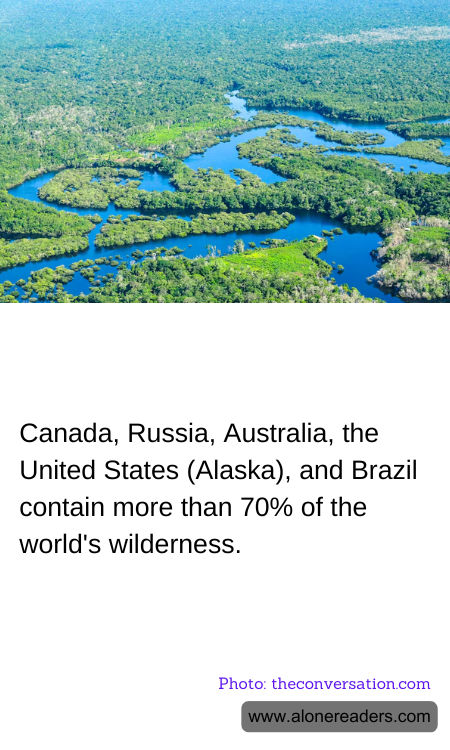
In a world where urbanization and industrialization are rapidly transforming landscapes, the existence of vast wilderness areas remains a testament to nature's enduring presence. Remarkably, more than 70% of the world's wilderness is concentrated in just five countries: Canada, Russia, Australia, the United States (specifically Alaska), and Brazil. These regions serve as vital sanctuaries for biodiversity, climate regulation, and cultural heritage, offering a glimpse into the planet's pristine past.
Canada, with its expansive boreal forests and tundra, is a haven for wildlife and a critical carbon sink. The country's wilderness areas, such as the vast stretches of the Yukon and the Northwest Territories, are home to iconic species like the grizzly bear, moose, and caribou. These regions not only support diverse ecosystems but also play a crucial role in indigenous cultures, providing resources and spiritual significance to many First Nations communities.
Russia, the largest country in the world, boasts an immense wilderness that spans from the taiga forests of Siberia to the remote Kamchatka Peninsula. This vast expanse is home to a myriad of species, including the elusive Siberian tiger and the Amur leopard. The Russian wilderness is a critical component of the global ecosystem, influencing weather patterns and serving as a significant reservoir of biodiversity.
Australia's wilderness is characterized by its unique and diverse ecosystems, ranging from the arid Outback to the lush rainforests of Queensland. The continent's isolation has led to the evolution of distinct flora and fauna, such as kangaroos, koalas, and the Great Barrier Reef's marine life. Australia's wilderness areas are not only ecological treasures but also hold deep cultural significance for Aboriginal peoples, who have lived in harmony with the land for tens of thousands of years.
Alaska, the northernmost state of the United States, is a land of extremes, with its towering mountains, expansive glaciers, and dense forests. This rugged wilderness is a sanctuary for wildlife, including brown bears, wolves, and bald eagles. Alaska's natural beauty and untamed landscapes attract adventurers and nature enthusiasts from around the world, offering a rare opportunity to experience the raw power of nature.
Brazil, home to the majority of the Amazon rainforest, is a critical player in the global environmental landscape. The Amazon is often referred to as the "lungs of the Earth" due to its vast capacity to produce oxygen and sequester carbon dioxide. This biodiverse region is home to countless species, many of which are found nowhere else on the planet. The preservation of Brazil's wilderness is essential not only for the health of the planet but also for the indigenous communities who depend on the forest for their livelihoods.
These five countries, with their vast and varied wilderness areas, play a pivotal role in maintaining the Earth's ecological balance. As stewards of these natural treasures, they face the challenge of balancing conservation efforts with economic development. The preservation of these wilderness areas is crucial for future generations, ensuring that the planet's natural beauty and biodiversity continue to thrive in an increasingly urbanized world.
