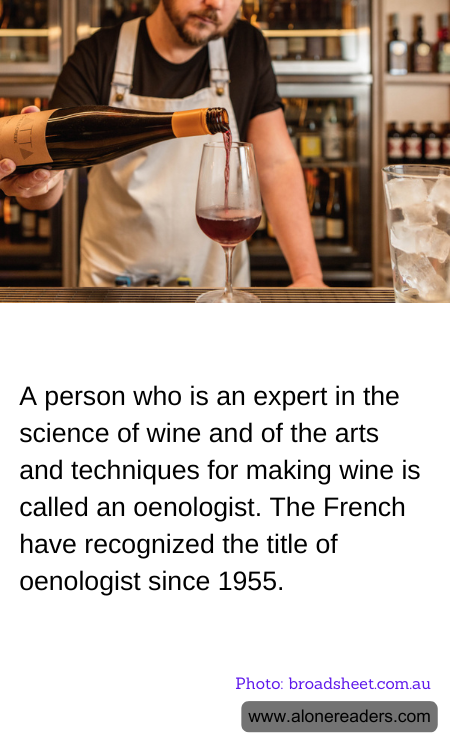
In the world of viticulture and winemaking, the role of an oenologist is both vital and fascinating. An oenologist is a specialist who dedicates their expertise to the science of wine and the intricate arts and techniques involved in its creation. This profession requires a deep understanding of the grapevine's biology, the chemistry of fermentation, and the sensory evaluation of wine, making it a unique blend of science and art.
The term "oenologist" is derived from the Greek word "oinos," meaning wine, and "logos," meaning study. It is a title that has been officially recognized in France since 1955, a testament to the country's long-standing tradition and reverence for winemaking. France, known for its prestigious wine regions such as Bordeaux, Burgundy, and Champagne, has always been at the forefront of wine innovation and quality. The formal recognition of oenologists underscores the importance of scientific expertise in maintaining and enhancing the quality of wine production.
Oenologists play a crucial role in every stage of winemaking, from the vineyard to the bottle. They are involved in selecting the best grape varieties, determining the optimal harvest time, and overseeing the fermentation process. Their work ensures that the wine's flavor, aroma, and texture meet the desired standards. Additionally, oenologists are responsible for quality control, ensuring that each bottle of wine is free from defects and meets regulatory standards.
Beyond the technical aspects, oenologists also possess a refined palate and a keen sense of smell, which are essential for the sensory evaluation of wine. This ability allows them to detect subtle nuances in flavor and aroma, which can significantly impact the final product. Their expertise helps winemakers create wines that not only reflect the unique characteristics of their terroir but also appeal to the tastes of consumers worldwide.
The role of an oenologist is ever-evolving, as they must adapt to new technologies and trends in the wine industry. With the growing emphasis on sustainability and organic practices, oenologists are increasingly involved in developing environmentally friendly methods of wine production. They also explore innovative techniques to enhance the quality and diversity of wines, ensuring that the industry continues to thrive in a competitive global market.
In conclusion, the oenologist is an indispensable figure in the world of wine, combining scientific knowledge with artistic intuition to craft wines that delight the senses. Their expertise not only preserves the rich traditions of winemaking but also drives the industry forward, ensuring that wine remains a cherished and celebrated part of cultures around the world. As the wine industry continues to evolve, the role of the oenologist will undoubtedly remain central to its success and innovation.
