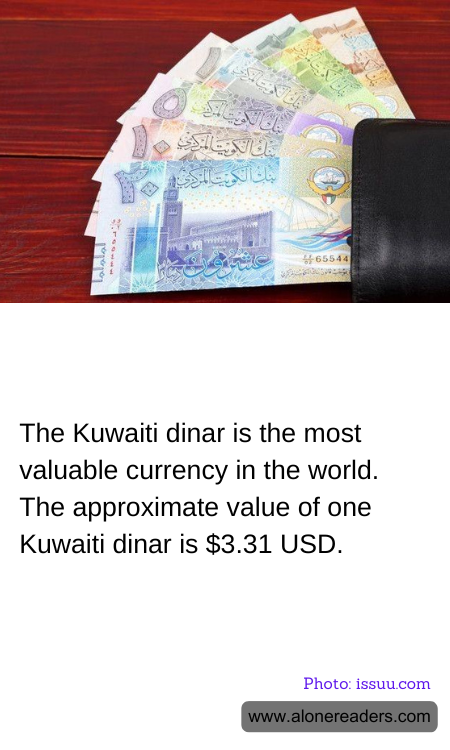
The Kuwaiti dinar holds the distinction of being the most valuable currency in the world, a status it has maintained for several years. As of the latest exchange rates, one Kuwaiti dinar is approximately equivalent to $3.31 USD. This remarkable valuation is not only a testament to Kuwait's robust economic framework but also a reflection of its strategic financial policies and abundant natural resources.
Kuwait, a small nation located at the tip of the Arabian Peninsula, is endowed with vast reserves of oil, which form the backbone of its economy. The country's wealth is largely derived from its oil exports, which account for a significant portion of its GDP. This oil wealth has allowed Kuwait to build a strong financial foundation, enabling it to maintain a stable and highly valued currency. The Kuwaiti government has implemented prudent fiscal policies, including a sovereign wealth fund that invests oil revenues to ensure long-term economic stability and growth.
The strength of the Kuwaiti dinar is also supported by the country's monetary policy, which is managed by the Central Bank of Kuwait. The bank employs a pegged exchange rate system, linking the dinar to a basket of international currencies, with a significant weight given to the US dollar. This system provides stability and predictability, which are crucial for maintaining investor confidence and supporting the currency's high value.
Moreover, Kuwait's political stability and strategic geopolitical position contribute to the dinar's strength. The nation has maintained a relatively stable political environment, which is attractive to investors and businesses. Additionally, its location in the Gulf region, with access to major shipping routes, enhances its economic significance and supports its currency's value.
The high value of the Kuwaiti dinar has several implications for the country's economy and its citizens. For Kuwaiti residents, a strong currency means greater purchasing power when traveling abroad or importing goods. It also reflects the country's economic health and the effectiveness of its financial management. However, it can pose challenges for non-oil sectors, as a strong currency can make exports less competitive on the global market.
In conclusion, the Kuwaiti dinar's status as the most valuable currency in the world is a result of a combination of factors, including the country's oil wealth, sound economic policies, and political stability. While it presents certain challenges, the high value of the dinar is largely seen as a positive indicator of Kuwait's economic strength and resilience. As global economic dynamics continue to evolve, Kuwait's ability to maintain the dinar's value will depend on its continued commitment to prudent fiscal management and diversification of its economic base.
