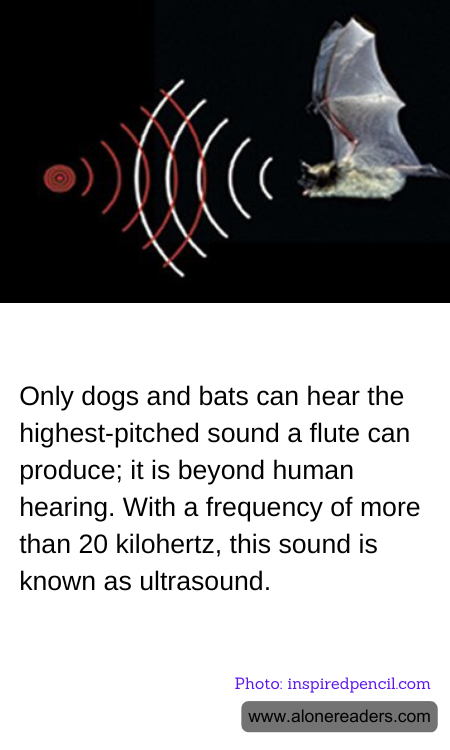
The enchanting sound of a flute has captivated audiences for centuries, its melodious notes weaving through the air with a grace that seems almost magical. Yet, there is a realm of sound produced by this instrument that remains a mystery to human ears. The highest-pitched sound a flute can produce reaches frequencies beyond the threshold of human hearing, entering the domain known as ultrasound. This sound, with a frequency of more than 20 kilohertz, is audible only to certain animals, such as dogs and bats, who possess the remarkable ability to perceive these high-frequency vibrations.
Humans typically hear sounds ranging from 20 hertz to 20 kilohertz, a spectrum that encompasses the vast majority of musical notes and everyday noises. However, the upper limit of this range is where the flute's highest notes transcend into ultrasound. While humans are unable to detect these sounds, dogs and bats have evolved to hear them, each for different evolutionary reasons. Dogs, with their acute sense of hearing, can detect sounds up to 45 kilohertz, a trait that has been honed over generations to aid in hunting and communication. Bats, on the other hand, rely on echolocation to navigate and hunt in the dark, using ultrasonic frequencies to map their surroundings with incredible precision.
The ability of these animals to hear ultrasound is a fascinating aspect of their biology, offering insights into the diverse ways in which different species interact with the world. For dogs, this heightened sense of hearing allows them to respond to high-pitched whistles and commands, making them excellent companions and working animals. Bats, meanwhile, use their ultrasonic capabilities to avoid obstacles and locate prey, a skill that is crucial for their survival in nocturnal environments.
The production of ultrasonic sound by a flute is a testament to the instrument's versatility and the skill of the musician. While these sounds are beyond human perception, they add a layer of complexity to the music, resonating in a way that is felt rather than heard. This phenomenon highlights the intricate relationship between sound and perception, reminding us of the unseen and unheard dimensions that exist in our world.
In a broader sense, the study of ultrasound and its perception by animals opens up new avenues for scientific exploration and technological innovation. From medical imaging to pest control, the applications of ultrasound are vast and varied, demonstrating the potential of harnessing these high-frequency sounds for human benefit. As we continue to explore the boundaries of sound and hearing, the mysterious notes of the flute serve as a reminder of the hidden symphonies that lie just beyond our reach, waiting to be discovered by those with the ears to hear them.
