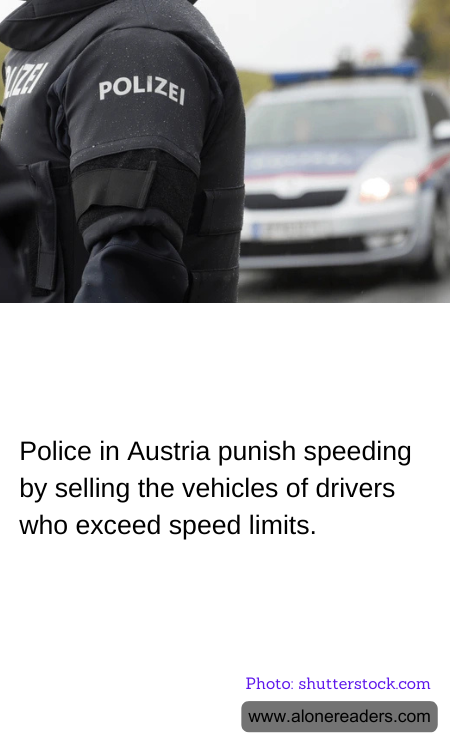
In a bold move to curb the increasing menace of speeding, Austrian authorities have introduced a stringent measure that targets not just the drivers but their vehicles as well. In a bid to enhance road safety and deter reckless driving, police in Austria have begun confiscating and selling the vehicles of drivers who exceed speed limits. This initiative is part of a broader strategy to enforce traffic laws more effectively and reduce the number of accidents caused by speeding.
The decision to sell the vehicles of speed offenders is a significant departure from traditional penalties such as fines and license suspensions. Austrian officials believe that the threat of losing one's vehicle will serve as a powerful deterrent against speeding. The policy is particularly aimed at repeat offenders and those who exceed speed limits by a substantial margin. By hitting drivers where it hurts most—their wallets and their means of transportation—authorities hope to instill a greater sense of responsibility among motorists.
This approach has sparked a mix of reactions among the public. Some view it as a necessary step to ensure the safety of all road users, while others see it as an overly harsh punishment. Critics argue that the policy could disproportionately affect individuals who rely on their vehicles for their livelihood. However, supporters contend that the potential loss of life due to speeding far outweighs these concerns. They point to statistics that show a significant number of road accidents are caused by excessive speed, leading to fatalities and serious injuries.
The implementation of this policy involves a clear process. Once a driver is caught exceeding the speed limit by a considerable margin, their vehicle is impounded. If the driver is unable to pay the hefty fines associated with their offense, the vehicle is then auctioned off. The proceeds from these sales are often used to fund road safety campaigns and infrastructure improvements, creating a cycle that benefits the broader community.
This measure is part of a larger trend in Europe, where countries are increasingly adopting stricter traffic regulations to combat road accidents. Austria's approach is being closely watched by other nations, as it could set a precedent for similar policies elsewhere. The effectiveness of this strategy will likely be evaluated over time, with data on accident rates and compliance levels providing insight into its impact.
In conclusion, Austria's decision to sell the vehicles of speeding drivers marks a significant shift in traffic law enforcement. While it may seem drastic to some, the policy underscores the seriousness with which the country views road safety. By prioritizing the well-being of all road users, Austria is taking a firm stand against speeding, hoping to foster a culture of responsible driving that could save lives.
