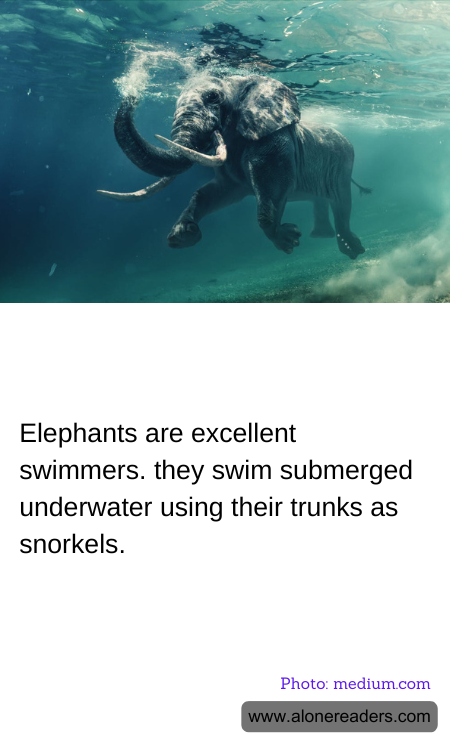
Elephants, the gentle giants of the animal kingdom, are often admired for their intelligence, social structure, and sheer size. However, one of their lesser-known yet fascinating abilities is their prowess in swimming. Despite their massive size, elephants are excellent swimmers, capable of traversing significant distances in water with remarkable ease. This ability is not only a testament to their adaptability but also an essential skill for their survival in the wild.
One of the most intriguing aspects of an elephant's swimming technique is their use of trunks as snorkels. When submerged, elephants extend their trunks above the water's surface, allowing them to breathe while their bodies are completely underwater. This unique adaptation enables them to swim for extended periods without needing to surface frequently for air. Their trunks, which are versatile tools used for feeding, drinking, and social interactions, become vital breathing apparatuses in aquatic environments.
Swimming is not just a leisurely activity for elephants; it plays a crucial role in their daily lives. In the wild, elephants often need to cross rivers and lakes in search of food, water, or new habitats. Their ability to swim efficiently allows them to navigate these water bodies safely and reach areas that might otherwise be inaccessible. Moreover, swimming helps elephants regulate their body temperature, especially in hot climates, as the water provides a cooling respite from the heat.
The physical attributes of elephants contribute significantly to their swimming capabilities. Their large, buoyant bodies provide natural flotation, while their powerful legs propel them through the water with ease. Elephants have been observed swimming distances of up to 50 kilometers, showcasing their endurance and strength. This ability is particularly beneficial during the monsoon season when rivers swell and floodplains expand, creating natural barriers that elephants must overcome.
In addition to their practical benefits, swimming is also a source of enjoyment for elephants. Observations of elephants in the wild and in captivity reveal that they often engage in playful activities while in the water. They splash, roll, and even dive, displaying a sense of joy and freedom. This playful behavior is not only entertaining to watch but also highlights the emotional depth and social bonds within elephant herds.
In conclusion, elephants are remarkable creatures with a diverse range of skills, and their ability to swim is a testament to their adaptability and intelligence. Using their trunks as snorkels, they navigate aquatic environments with grace and efficiency, ensuring their survival and well-being. Whether crossing vast rivers or simply enjoying a refreshing dip, elephants demonstrate that even the largest land animals can be masters of the water. Their swimming prowess is yet another reason to admire and protect these magnificent animals, ensuring they continue to thrive in their natural habitats for generations to come.
