Imagine taking a sip of water and realizing that the very molecules you are drinking might have once quenched the thirst of a dinosaur. This fascinating concept is rooted in the fact that the amount of water on Earth is constant and perpetually recycled through the planet's natural processes. This means that the water we consume today has been part of an incredible journey, spanning millions of years and countless transformations.
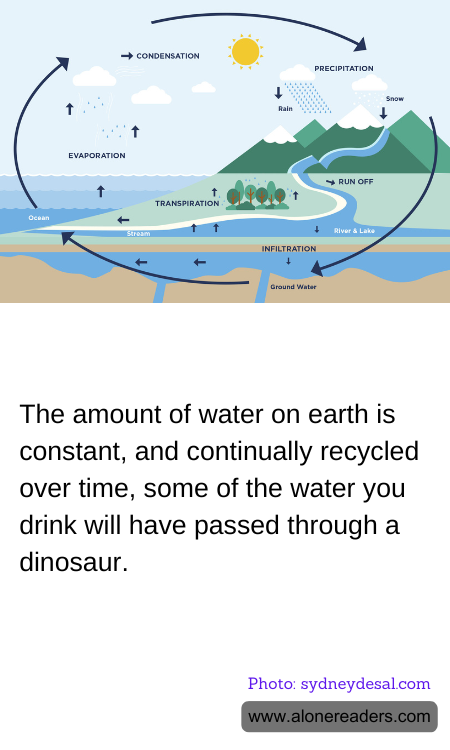
Water is one of Earth's most precious resources, covering about 71% of the planet's surface. Despite its abundance, the total volume of water has remained relatively unchanged over geological time. This is due to the water cycle, a continuous process of evaporation, condensation, precipitation, and collection. Through this cycle, water moves from oceans to the atmosphere, falls as rain or snow, and flows through rivers and streams back to the sea, only to begin the cycle anew. This endless loop ensures that the same water molecules are used over and over again, linking us to the distant past.
The idea that some of the water we drink today may have once been consumed by dinosaurs is not just a whimsical thought but a scientific possibility. Dinosaurs roamed the Earth during the Mesozoic Era, which spanned from about 230 to 65 million years ago. During this time, the water cycle was already in full swing, recycling water through various forms and locations. As dinosaurs drank from ancient rivers and lakes, the water they consumed eventually returned to the environment, evaporated into the atmosphere, and fell again as precipitation, continuing its eternal cycle.
This recycling of water highlights the interconnectedness of all life on Earth. It serves as a reminder of the planet's resilience and the delicate balance of its ecosystems. The water we use for drinking, cooking, and cleaning has been part of countless natural processes and has sustained life for eons. This continuity underscores the importance of conserving and protecting our water resources, ensuring that future generations can enjoy the same life-sustaining benefits.
Understanding the constancy and recycling of Earth's water also offers a unique perspective on our place in the natural world. It connects us to the ancient past and emphasizes our responsibility to maintain the health of our planet. By appreciating the journey of water through time, we can foster a deeper respect for this vital resource and the intricate systems that sustain life on Earth. As we sip our next glass of water, we can marvel at the thought that we are part of a timeless cycle, sharing a connection with the majestic creatures that once roamed our planet.
