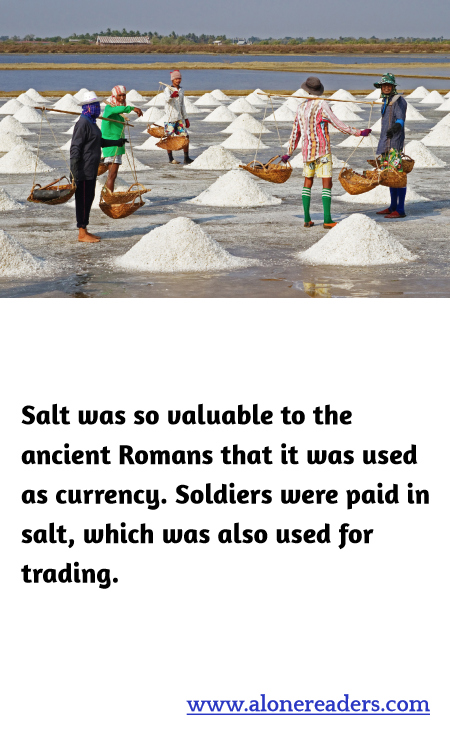
Salt, known as "white gold" in ancient times, held remarkable significance in the Roman economy and culture. The value of salt extended beyond mere flavoring or food preservation. It was so integral to Roman society that it influenced the very fabric of economic life, including the way soldiers were compensated.
The Roman soldiers were sometimes paid a salarium, which is believed to be derived from 'sal,' the Latin word for salt. This is also the origin of the English word "salary." This kind of payment was made in consideration of the soldiers buying salt, a vital commodity, or was directly given in the form of salt. This underscores the importance of salt not merely as a seasoning, but as a vital commodity that was crucial to the preservation of food and maintenance of health.
In terms of trade, salt served as a practical currency due to its high demand and portability. Its use as a trading medium allowed for the facilitation of commerce across various regions of the Roman Empire. Routes specifically dedicated to the salt trade, known as "via salaria" or salt roads, were established, linking salt-rich areas with major markets. This connectivity not only boosted local economies but also helped in the expansion of the empire by establishing stable trading routes.
Moreover, the strategic importance of salt was evident as the Roman authorities maintained a strong control over the production and distribution of salt. Historical records suggest that salt taxes and monopolies were common tools used by rulers to strengthen their economic and political hold. The revenue from salt helped fill imperial coffers, funding roads, infrastructure, and military expeditions.
In essence, salt was more than just a seasoning in ancient Rome; it was a cornerstone of the empire's economy, a critical element in military operations, and a substantial contributor to Rome’s ability to extend its influence over distant lands. Understanding the role of salt in ancient times offers insight into the complexities of Roman economic and political strategies, as well as the everyday lives of its people.
