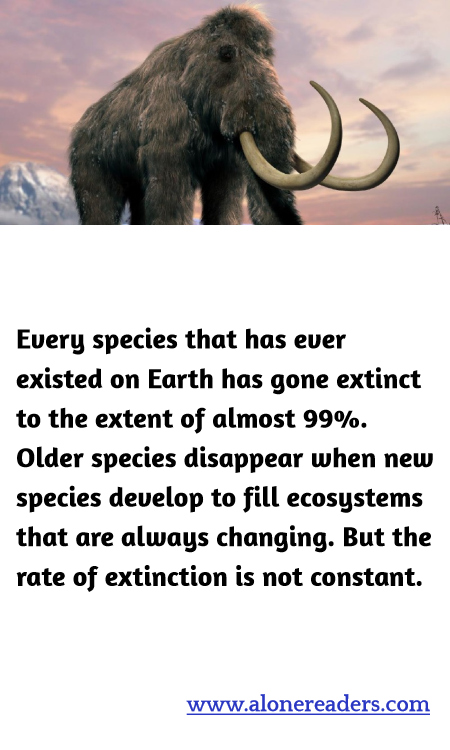
Extinction is a natural part of life on Earth, a reflection of the biological axiom that species must adapt or perish in the face of changing environmental conditions. It's estimated that as much as 99% of all organisms that have ever lived on Earth are now extinct. This staggering figure highlights not only the impermanence of existence but also the evolving nature of life itself. Extinctions occur because of a variety of reasons—some species evolve and adapt successfully, others succumb to changes in the climate, cataclysmic natural events, or competition.
Throughout Earth’s history, there have been five major mass extinction events that drastically reshaped life on our planet. These events are distinguished not just by the volume of loss, but by their impact on the ecosystems and the opening of ecological niches which allowed new species to emerge and thrive. Perhaps the most well-known of these is the Cretaceous-Paleogene extinction event approximately 66 million years ago, which wiped out the dinosaurs and allowed mammals to rise to dominance.
Typically, species extinction can be seen as a gradually increasing likelihood as species fail to adapt to slowly shifting environments or competitive pressures. However, in the modern era, this rate is alarmingly accelerated, largely due to human activity. Habitat destruction, climate change, pollution, and over-hunting have all imposed unnatural pressure on many species that wouldn’t otherwise be facing imminent extinction. This has led scientists to argue that we are currently experiencing the sixth mass extinction.
The implications of accelerated species loss are profound not only for the natural world but also for humanity. Each species plays a specific role within its ecosystem, and the removal of a single species can have cascading effects through the entire system, influencing many other species and even the ecosystem's functionality. For example, the extinction of a top predator can lead to an overabundance of prey species, which may then overconsume vegetation, altering the landscape and impacting other species dependent on those plants for survival.
Understanding the natural rhythms of extinction and evolution helps scientists anticipate and mitigate the impacts of this loss, ensuring ecosystems remain resilient. Conservation efforts, ecological research, and policies aimed at biodiversity preservation are therefore crucial in slowing down the rate of extinction and protecting the intricate web of life on our planet. The future of many species, including our own, depends significantly on our ability to adapt to and mitigate biological losses in a fast-evolving world.
