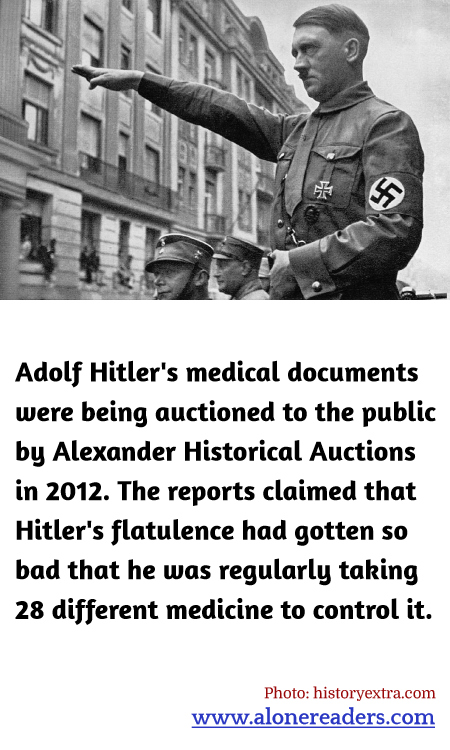
In 2012, an intriguing set of documents surfaced at an auction held by Alexander Historical Auctions, revealing some unusual details about one of history's most notorious figures, Adolf Hitler. These medical documents painted a picture of Hitler's lesser-known struggles with severe gastrointestinal issues, specifically chronic flatulence. While it is common knowledge that Hitler suffered from various health problems, these reports shed light on the extent of his discomfort, which was significant enough to require medical intervention.
According to the documents, Hitler was taking an astonishing variety of medications, totaling 28 different types, to manage his condition. This information provides a stark contrast to the formidable, controlled persona Hitler projected publicly. The necessity for such a significant amount of medication suggests that his flatulence was not only a physical ailment but also a source of considerable personal anguish and embarrassment. Moreover, it paints a picture of a man desperately seeking any form of relief from his ailments, relying heavily on medical treatments that were, at the time, likely experimental and potentially hazardous.
The auction itself, and the decision to make these documents public, sparked a mix of fascination and outrage. While some viewed these details as crucial historical insights into Hitler's daily life and health, others felt that the auctioning of such items was in poor taste, trivializing the atrocities he committed during his dictatorship. Regardless of the perspectives on the auction, the public revelation of Hitler's health issues adds a complex layer to the understanding of his character and lifestyle, illustrating just how pervasive and personal the impact of health can be, even for a figure as infamous as Adolf Hitler.
The detailed nature of these documents and the broad spectrum of medications he used suggest that his doctors were grappling with how best to treat his severe symptoms. This aspect of Hitler's personal health challenges offers a peculiar footnote to the broader historical narrative of his life, providing a rare glimpse into the private struggles of a man who played a pivotal, albeit dark, role in world history. Despite his public demeanor of unwavering strength and decisiveness, these medical struggles reveal a private battle with discomfort and illness, illustrating a dichotomy between Hitler's public and private personas.
