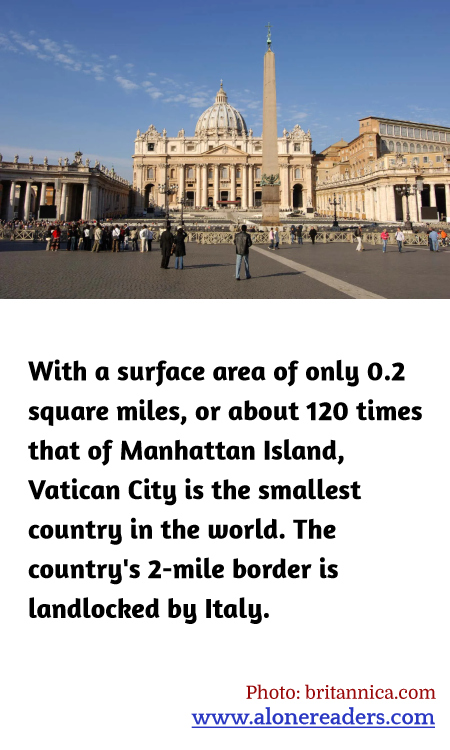
Vatican City, officially known as the Vatican City State, holds the unique distinction of being the smallest independent state in the world by both area and population. Encompassing just 0.2 square miles, it is indeed about 120 times smaller than Manhattan Island, a size that underscores its remarkable global influence despite its minuscule physical footprint. This tiny sovereign state, centered within Rome, is completely encircled by Italy, making it one of the few countries to be entirely landlocked by another country.
The significance of Vatican City extends far beyond its size. It serves as the spiritual and administrative center of the Roman Catholic Church and is the residence of the Pope, the supreme leader of the Church. This enclave is characterized by its profound religious and historical heritage. The Vatican's architecture is among its most striking features, with St. Peter's Basilica and the Sistine Chapel being key highlights. These iconic structures not only attract millions of tourists and pilgrims each year but are also masterpieces of Renaissance art, featuring works by illustrious artists such as Michelangelo and Raphael.
Despite its small size, Vatican City is self-governing and operates with its own set of laws under the leadership of the Pope. The economy of Vatican City is supported by the sale of postage stamps, tourist mementos, and museum admission fees. Another significant source of revenue is contributions from Roman Catholics around the world.
The country also has a unique cultural scene, partly due to its religious significance and partly because of its historical wealth. The Vatican Library and the Vatican Museums are treasures troves of culture, housing invaluable artifacts, manuscripts, and artworks gathered over centuries. The Vatican’s influence in matters of global Catholic doctrine and its role in international diplomacy further highlights its importance on the world stage.
Its establishment as an independent sovereign entity was officiated through the Lateran Treaty of 1929 between the Holy See and Italy. This treaty recognized the full ownership, exclusive dominion, and sovereign authority and jurisdiction of the Holy See over the Vatican, thus allowing it to remain neutral in international conflicts.
Although the population of Vatican City is small, with few permanent residents predominantly consisting of clergy and nuns, its reach and impact are anything but. Vatican City continues to captivate the imaginations of people worldwide, combining deep spiritual tradition with a remarkable history that belies its diminutive scale.
