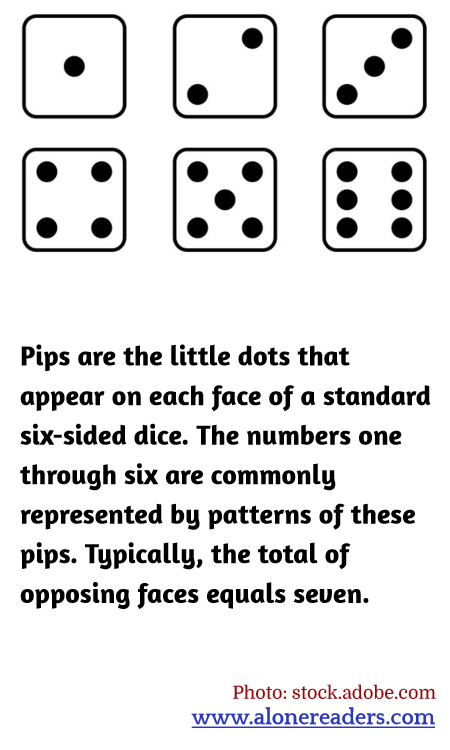
Pips are an essential feature of the standard six-sided dice, known as dice faces, crucial to numerous board games, gambling activities, and educational tools. These small dots symbolize the numbers one through six and are arranged in specific patterns to make identification quick and intuitive. On a typical dice, the amount of pips on a side determines its value, which players use to make moves or score points in various games.
The distribution and layout of pips on a dice are not random but instead follow a conventional design to balance the dice and maintain fairness. For each die, the sum of the numbers on opposing faces always equals seven. This universal standard means that one opposes six, two opposes five, and three opposes four. This arrangment is a thoughtful feature to balance the weight distribution across the die, ensuring that each side has an equal probability of landing face up, thus maintaining the integrity of games.
Understanding and recognizing the pattern of pips can be educational, especially for children learning numbers and practicing counting. For instance, while playing board games, kids engage with these basic arithmetic concepts repeatedly, which can enhance their numerical abilities and understanding of probabilities.
Moreover, the design of dice and the placement of pips have not only been a practical concern but also an aesthetic and cultural element in gaming. Different materials, sizes, and colors can be used, but the purpose remains the same: to provide a random result that impacts game play. This element of chance introduced by dice rolling makes many games exciting and unpredictable.
Whether used in a casual board game night at home, in educational settings, or in high-stakes gambling scenarios, the design of pips is a small yet crucial detail that transcends mere decoration. It speaks to a rich tradition of gaming, learning, and a bit of luck, encapsulating a blend of design, function, and amusement perfected over centuries.
