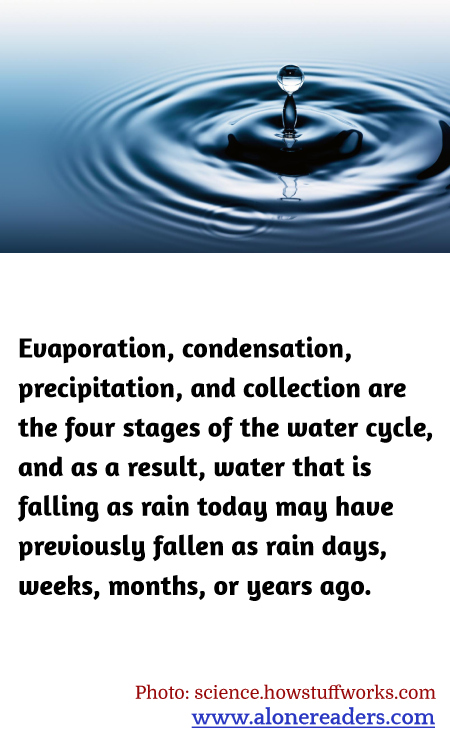
The water cycle, an incredible natural system powered by the sun's energy, works continuously to circulate water throughout the Earth's atmosphere and surface. This cycle comprises four essential stages: evaporation, condensation, precipitation, and collection, each playing a vital role in the distribution and renewal of our planet's water supply.
Evaporation occurs when water from oceans, lakes, rivers, and even soil transforms into vapor due to the heat from the sun. This water vapor rises into the air, where cooler temperatures cause it to undergo condensation, turning the vapor back into liquid droplets. These droplets gather and grow within clouds until they are heavy enough to fall as precipitation—rain, snow, sleet, or hail—depending on the atmospheric conditions. Once the water reaches the ground, it follows various pathways. It might seep into the soil, replenishing groundwater supplies, or flow over the land's surface, eventually gathering back into bodies of water. This process, known as collection, thus completes the cycle, only for it to begin again.
This cyclical process ensures that the same water that falls as rain today may have indeed fallen in another part of the world days, weeks, months, or even years ago. Each phase in the water cycle plays a crucial role in sustaining life, influencing climate patterns, and shaping the natural world. The water cycle not only distributes fresh water across the globe, supporting ecosystems and human populations, but it also plays an integral role in weather systems and the overall climate.
Understanding the water cycle's functions helps highlight the interconnectedness of global ecosystems and the dependency of all life forms on this continuous movement of water. It underscores the importance of conserving our water resources and protecting our environment, ensuring that the water cycle remains balanced and effective for generations to come.
