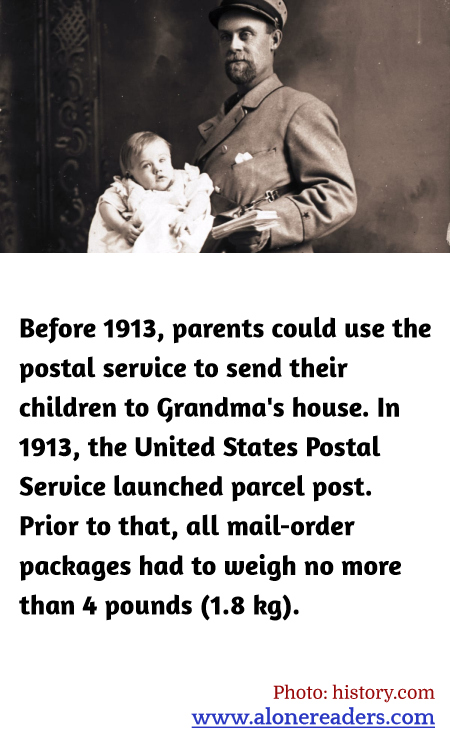
Before the inception of parcel post by the United States Postal Service in 1913, the options for sending large packages, including unusual "parcels", were extremely limited due to the restriction that mail-order packages could not exceed four pounds. This weight limit made it impractical for sending anything beyond small items through the mail. However, with the introduction of parcel post, which allowed larger and heavier items to be mailed, an unexpected practice briefly emerged: parents began mailing their children to destinations like Grandma's house.
This phenomenon was facilitated by the relatively low cost of mailing a child compared to buying a train ticket, for example. Several famous cases surfaced where children were sent through the postal system with stamps attached to their clothing, the postage cost being significantly less than passenger fare for transportation. Postmasters accepted these live "parcels", partly amused and partly bemused, and these children were usually accompanied by letter carriers to their destinations. Such instances occurred enough times to make it a notable topic of discussion across the country.
The practice, though never officially sanctioned by the Postal Service, was carried out under the assumption that it was permissible under the guidelines of the new parcel post system. However, by 1914, regulations became stricter, and the post explicitly prohibited the sending of humans in the mail. This marked the end of a brief but remarkable chapter in the history of postal services, where the line between mail and passenger transport blurred amusingly. The postal system's evolution continued to shape and mirror changes in society, balancing innovation with the need for regulation and safety in delivery services.
