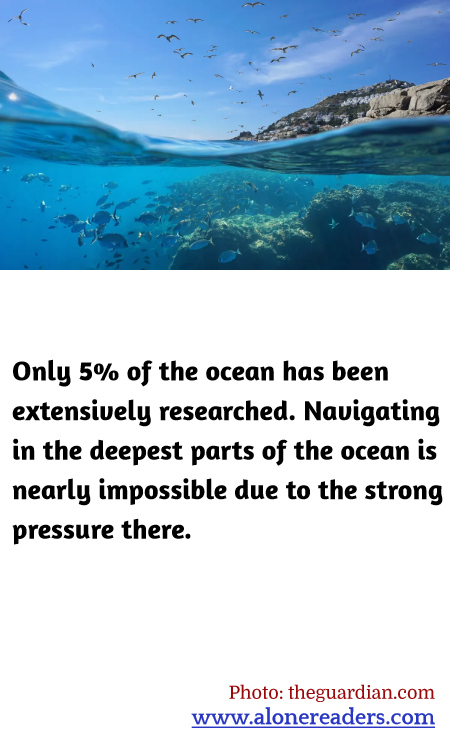
The ocean, covering more than 70% of the Earth's surface, remains one of the most mysterious and least explored areas on our planet. Surprisingly, only about 5% of the ocean has been thoroughly researched and understood. The vast majority of the ocean's depths, often referred to as the deep sea, are largely uncharted. This limited exploration is primarily due to the significant technical and physical challenges that the extreme conditions of deep-sea environments pose.
One of the most daunting challenges faced by oceanographers and researchers is the intense pressure found in the deepest parts of the ocean. For every 10 meters one descends into the ocean, the pressure increases by about one atmosphere. In the Mariana Trench, the deepest known part of the world's oceans, pressures exceed 1,000 atmospheres. This is equivalent to having several jumbo jets piled on top of a person. Under such extreme conditions, standard submersible vehicles and equipment can easily be crushed.
Despite these challenges, the allure of the deep sea and its potential scientific rewards drive ongoing innovation in technology. Recent advancements in robotics, materials science, and engineering have led to the development of more robust and sophisticated submersibles capable of withstanding extreme pressures and capturing high-resolution data from the ocean floor. These submersibles are equipped with specialized cameras, sensors, and even robotic arms to collect samples.
Moreover, exploring these uncharted territories is not just about expanding our geographical knowledge but also about understanding the diverse life forms inhabiting these depths. Unique ecosystems thrive in complete darkness, supported by hydrothermal vents that release minerals and heat. Studying these systems provides insights into biodiversity and the biochemical cycles of the ocean, which have implications for fields as varied as medicine, climate science, and biology.
Each expedition to the deep sea not only pushes the boundaries of human knowledge but also brings to light the deep interconnections within our planet's ecosystem. The continued exploration of the world's oceans is essential for predicting future climate patterns, conserving marine biodiversity, and managing resources sustainably. Therefore, even though navigating the deepest parts of the ocean is nearly impossible, the endeavor to overcome these challenges and discover more about this final frontier continues to inspire scientists and explorers around the globe.
