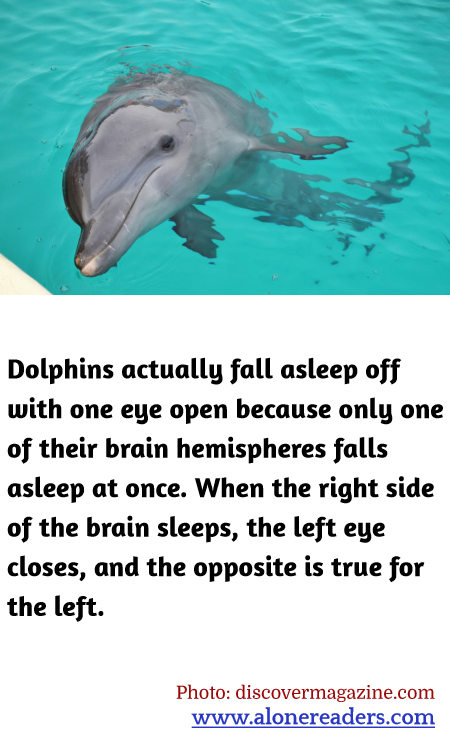
Dolphins have a fascinating approach to sleep that differs significantly from humans—this adaptation is crucial for their survival in the aquatic environment. Unlike humans, who typically go through periods of full unconsciousness during sleep, dolphins cannot afford to be completely asleep in the water. Instead, they exhibit a unique behavior known as unihemispheric slow-wave sleep (USWS). This means that only one hemisphere of their brain is asleep at any given time, while the other remains awake and alert.
This adaptation serves multiple purposes. First and foremost, it allows dolphins to continue breathing while they are sleeping. As dolphins are air-breathing mammals, they need to come to the surface to breathe. The awake hemisphere can control breathing and ensure that the dolphin surfaces for air as needed. Secondly, maintaining one half of the brain in a wakeful state allows them to be vigilant to potential threats from predators. The ocean is a dynamic environment with many risks, and the ability to stay partially conscious helps dolphins to react swiftly to danger.
The visual manifestation of this sleeping method is quite striking; when the right hemisphere of the dolphin's brain is asleep, the dolphin's left eye will close, and vice versa. This eye closure correlates with the sleeping hemisphere, providing a visible sign of the dolphin's sleep state.
Furthermore, this manner of sleeping has implications for how dolphins interact socially. Being partially awake means that dolphins can stay in groups and maintain social bonds even during resting periods. There is evidence suggesting that dolphins may synchronize their sleep states to some extent, which helps in maintaining group cohesion and coordination.
This unihemispheric sleep is not exclusive to dolphins and can be observed in other marine mammals and some bird species as well. However, dolphins are often studied for their pronounced demonstration of this trait. Understanding the intricacies of dolphin sleep not only sheds light on their survival strategies, but it also enriches our knowledge of the potential variability of sleep mechanisms across different species. This could have broader implications for understanding sleep functions universally, including in humans.
