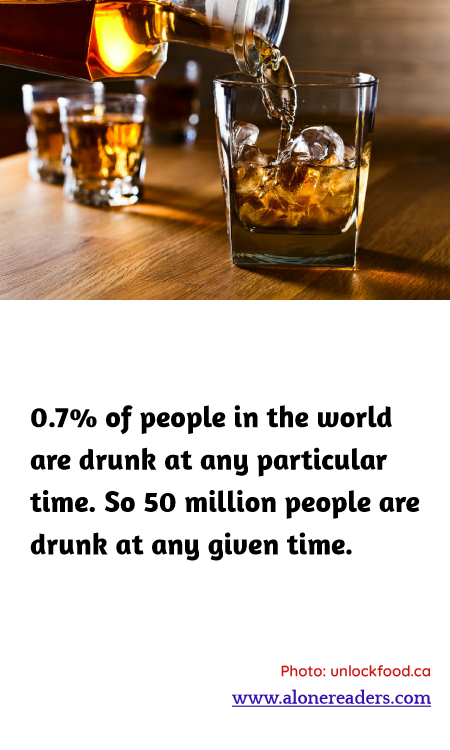
Imagine walking through a busy street in a major city anywhere in the world. Now consider this intriguing statistic: at any given moment, about 0.7% of the world's population is drunk. That means, out of the roughly 7.9 billion people inhabiting the planet, approximately 50 million are under the influence of alcohol at the same moment. This staggering figure sheds light on the pervasive and universal role that alcohol plays in social and cultural practices across the globe.
Alcohol consumption has been a part of human society for thousands of years, tracing back to ancient civilizations that fermented grains or fruits. In many cultures, drinking alcoholic beverages is a social ritual, integral to celebrations, religious ceremonies, and communal gatherings. Yet, the impact of alcohol extends far beyond these social functions.
Economically, the alcohol industry is a major global market, encompassing the production, distribution, and sale of beers, wines, and spirits. This industry supports millions of jobs worldwide and generates significant revenue for economies. However, the high consumption rate reflected in the 50 million drunk individuals at any moment also highlights challenges such as public health issues, including the risks of alcoholism, underage drinking, and health complications related to excessive alcohol consumption.
Public health systems and policymakers continuously grapple with these issues, balancing cultural norms and economic benefits against the health risks and social costs associated with alcohol consumption. Various strategies, such as regulation of sales, public awareness campaigns about the dangers of drinking and driving, and treatment programs for alcohol dependency are employed to mitigate the negative impacts.
The statistic also prompts us to think about the social norms surrounding drinking. In many western societies, for example, drinking is largely accepted, if not encouraged. Conversely, in some Islamic cultures, alcohol is largely or entirely prohibited due to religious beliefs. This stark difference in societal norms speaks to the broader diversity of cultural practices and beliefs about alcohol.
The fact that at any given moment, millions of people around the world are experiencing the effects of alcohol is a testament to its deeply rooted presence in human culture. It challenges us to consider how something as simple as a fermented beverage can have vast and varied impacts on health, economy, and society. Whether seen as a concern or a celebration, the influence of alcohol on our global society is undeniably profound.
