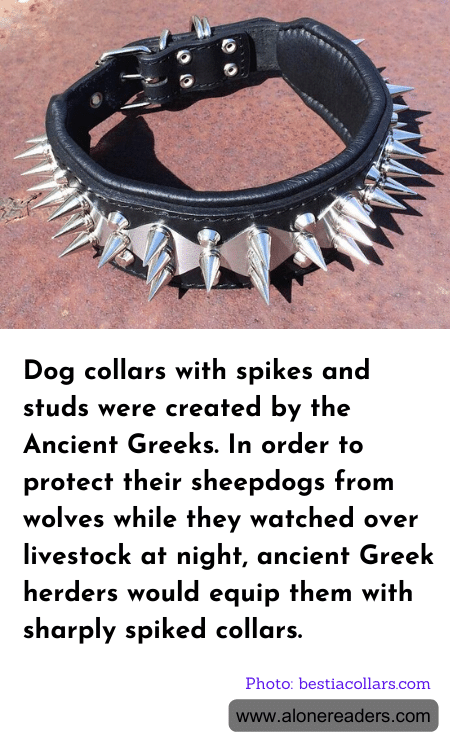
The use of spiked and studded dog collars traces back to ancient civilizations, notably among the Ancient Greeks. This specific type of collar, known as a "melanochalcum," was not initially intended as a fashion statement or a mere accessory. Instead, its creation was driven by practical and protective purposes, particularly geared towards safeguarding sheepdogs from predators while they watched over flocks at night.
Sheepdogs in ancient Greece were essential to herders, serving as both companions and protectors of livestock. The terrain and vast landscapes often left these dogs and their flocks susceptible to attacks from wolves and other wild animals. To mitigate this risk, Greek herders designed collars equipped with spikes. These spikes were strategically positioned to protect the dog’s neck, which is commonly targeted during attacks. By deterring predators from biting the dogs, the collars ensured that the sheepdogs could perform their guardian roles effectively.
Over time, the utilization of spiked and studded dog collars transcended their original, utilitarian purpose. As they spread across different cultures and epochs, the design adopted more decorative elements, evolving into a symbol of strength and fierceness for dogs across various breeds and roles. Despite this shift towards aesthetics, the protective nature of the spiked collar remains evident in some working dogs today, particularly those in law enforcement and military settings.
In contemporary times, these collars are available in a wide range of designs and materials, reflecting both their historical roots and modern cultural shifts in pet ownership and canine fashion. While they continue to serve a protective function for some working dogs, they are also embraced by pet owners who appreciate their historical significance and unique aesthetic. Nevertheless, it’s important for dog owners to choose collars that not only look good but also ensure comfort and safety for their pets, avoiding any potential injuries or discomfort. Understanding the historical context and function of these collars enriches the appreciation of this distinctive dog accessory, linking present-day practices with ancient traditions.
