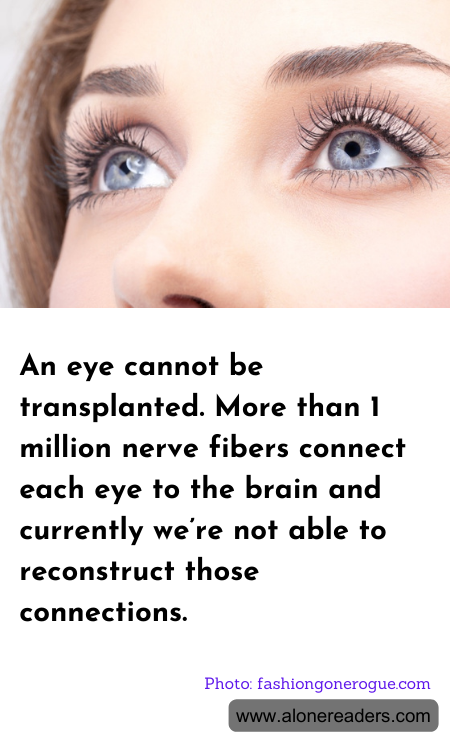
An eye transplant remains beyond the reach of modern medicine, largely due to the complex network of over a million nerve fibers that intricately connect each eye to the brain. These nerves are responsible for transmitting visual information from the retina directly to the brain, where it is processed and interpreted. The sophisticated nature of this connectivity means that even slight errors in connection can lead to failure in transmitting visual data accurately.
Currently, medical science does not possess the necessary technology or methodology to reconstruct or replicate these intricate neural pathways precisely. Any attempt to reconnect these nerve fibers during a transplant would need to ensure perfect alignment and functionality, a feat which has not yet been accomplished in any area of nerve regeneration or repair.
However, advancements in other areas such as corneal transplants and the development of bionic eyes offer some hope for individuals suffering from visual impairments. A corneal transplant, which involves replacing a diseased or scarred cornea with a healthy one from a donor, is a common and generally successful procedure that can restore or significantly improve vision in many patients. On the technology front, bionic eyes or retinal implants work by converting video images captured by a miniature camera into electrical pulses that are then sent to the brain.
While these alternatives do not replace the eye entirely, they significantly improve the quality of life for many patients. Researchers continue to delve into the possibilities of full eye transplants, with hopes that future advancements in nerve regeneration and surgical techniques will someday make it feasible. Until then, the focus remains on improving and expanding existing treatments that address the components of the eye which can be successfully transplanted or repaired.
