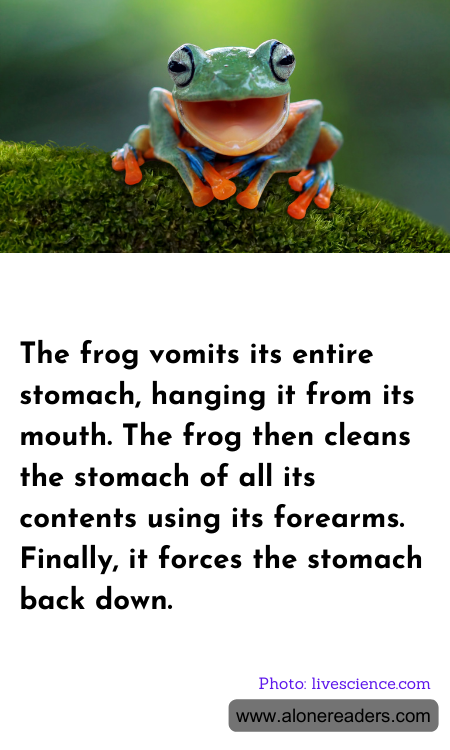
Frogs have a unique and somewhat startling method of dealing with indigestible food or gastric upset. When a frog eats something that it cannot digest or if it has ingested toxic substances, it undergoes a process that might seem quite bizarre to us: it expels its entire stomach from its mouth. This is not a frequent occurrence but is a drastic measure taken during extreme digestive distress.
During this process, the stomach is turned inside out and dangles from the frog's mouth. Once the stomach is fully everted, the frog uses its forearms to remove the contents manually. This might include undigested food, parasites, or other debris that could be causing irritation or harm to the frog's internal system. It is a survival mechanism that allows the frog to rid itself of harmful substances without passing them through the entire digestive tract, which could result in further toxicity or blockages.
After cleaning, the frog then performs the extraordinary task of reinserting its stomach back into the proper position within its body. This is done by gradually pulling and tucking the stomach back into place using a series of muscular contractions. It’s a remarkable example of how amphibians have adapted to handle environmental and dietary challenges.
This self-cleaning mechanism highlights the resilience and adaptability of frogs, enabling them to survive in environments where they might ingest harmful or indigestible substances. It also underscores the frogs' role in the ecosystem as both predators and prey, and their ability to cope with a variety of ecological threats. Despite their often small size, frogs have complex biological systems that allow them to navigate and thrive in diverse and sometimes hostile environments.
