Swifts, those aerial acrobats of the sky, consume an impressively diverse diet, primarily made up of insects and arachnids caught in flight. These birds have adapted to their fast-paced, airborne lifestyle with unique feeding habits that allow them to make the most of their environment. Essential components of their diet include aerial spiders, which drift from one place to another using silk strands known as "ballooning." Dragonflies also constitute a significant portion of their intake; these large, agile insects are rich in protein and are often captured during swifts' dazzling aerial pursuits.
Other frequent items on the swifts' menu are various flies, ants, aphids, wasps, and bees. Catching these smaller insects requires incredible speed and precision, as swifts navigate through the air at high velocity. They benefit from a rich and varied diet that helps sustain their energetic flight; some swift species spend most of their lives airborne, landing only to breed.
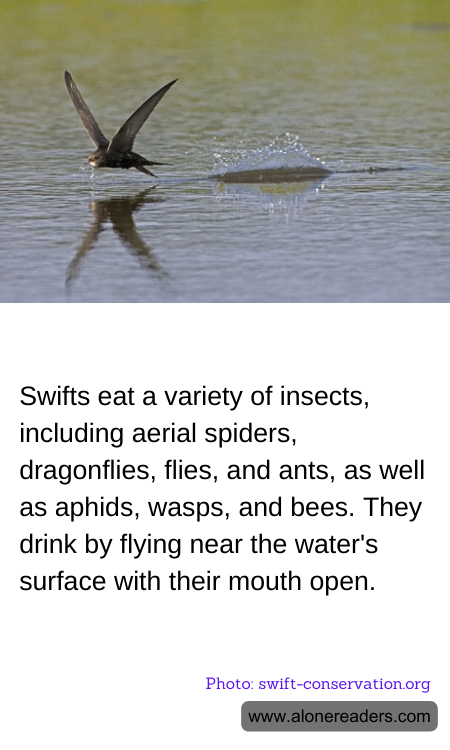
Swifts also have a unique method of drinking— another adaptation to their airborne existence. Unlike many birds that stop to sip water, swifts hydrate on the fly, quite literally. They drink by skimming close to the surface of a body of water with their mouths open, scooping up water as they continue to glide at speed. This ability is crucial, particularly on long flights during migration, allowing them to remain hydrated without the need to land, which can expose them to predators.
The efficiency of swifts in capturing a variety of insects not only benefits the birds themselves but also contributes to controlling insect populations, highlighting their role in ecosystem balance. Their feeding habits exemplify perfect adaptation to a life literally lived on the wing, combining speed, agility, and functional anatomy to survive in their unique niche above the earth.
