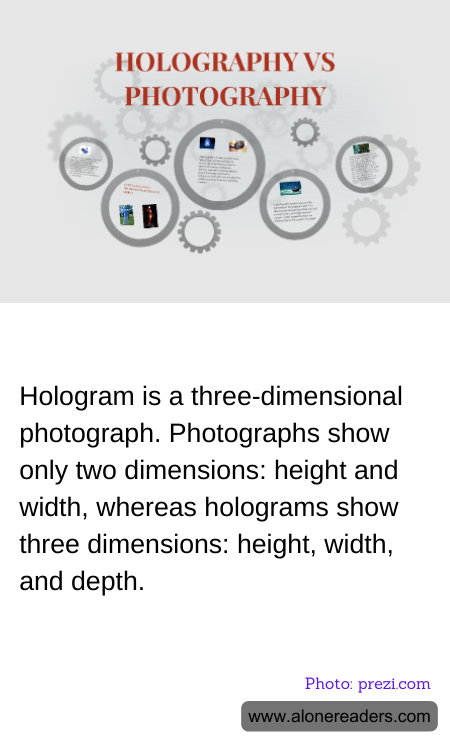
Holography is a sophisticated photographic technique that captures the light scattered from objects, presenting it in a way that is visually three-dimensional. Traditional photographs capture the two-dimensional representation of a scene, including height and width, but lack depth perception – a key aspect that the human eye normally perceives. Holograms manage to overcome this limitation by recording not only the intensity of light, as conventional photographs do, but also the phase of light.
The unique aspect of holography begins with the use of laser light, which is coherent and monochromatic. During the recording of a hologram, a laser beam is typically split into two separate beams: the reference beam and the object beam. The object beam illuminates the object and reflects onto a holographic medium (such as photographic plate or film), where it meets the reference beam. This intersection creates an interference pattern which is recorded on the holographic medium. This pattern is key because it encodes all the visual information needed to recreate the three-dimensional shape of the original object.
When viewing a hologram, the holographic image changes slightly based on the viewer’s perspective, simulating the way objects appear differently depending on the angle of view in real life. This shift is due to the hologram's ability to reproduce the light waves that were originally scattered by the object, a feature that tricks the brain into seeing depth and realistic three-dimensional detail.
In practical terms, holography can be applied in various fields. It’s widely recognized in security, such as anti-counterfeiting measures on currencies and credit cards. The technology is also employed in data storage, where its ability to store large volumes of data in a three-dimensional space is exceptionally valuable. Medicine and scientific visualization are other areas where holographic techniques help in detailed three-dimensional imaging for diagnostic and educational purposes.
With ongoing advancements in laser technology and digital imaging, the future of holography holds significant promise for even broader applications, including in areas like telecommunications, entertainment, and virtual reality. As we continue exploring the capabilities of holographic technology, we could see more immersive and interactive applications that could transform how we interact with digital media. Through these developments, holography not only challenges our traditional perceptions of dimension in photography but also expands the horizons of how visual information can be presented and experienced.
