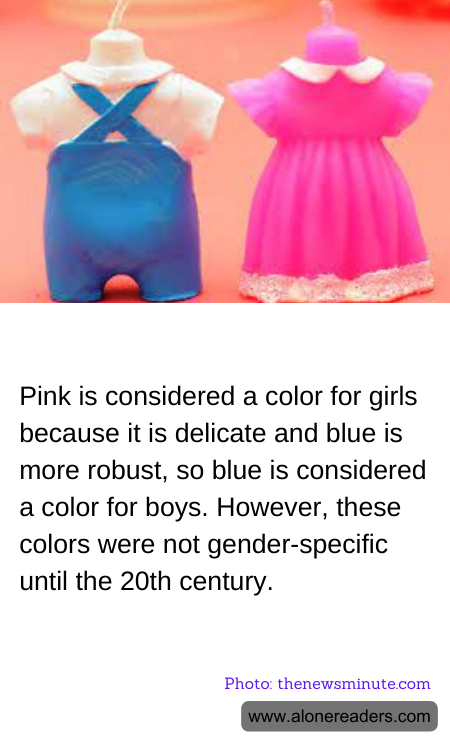
The association of pink with girls and blue with boys is a relatively modern phenomenon, established in the 20th century. Before this period, the color preferences for children were not strongly tied to gender. In fact, in the early 1900s, it was common in the United States and Europe for boys to wear white dresses until the age of six or seven. This practice was both for convenience (easier laundering) and because young children of both genders were viewed more neutrally in terms of gender identity.
The shift towards gender-specific colors began around the 1940s. Before this switch, some sources even suggested pink, being a stronger color, was more suitable for boys, while blue, which was considered more delicate and dainty, was preferable for girls. This perspective was reflected in various articles and advertisements of that time. It wasn't until post-World War II that manufacturers and retailers saw an opportunity to market products more strategically. By assigning pink to girls and blue to boys, they created a new marketing tactic which encouraged parents to purchase specific products tailored to each gender.
This marketing strategy coincided with the rise of consumer culture in the mid-20th century, reinforced by advertisements and the proliferation of mass media. As families became eager to conform to burgeoning societal norms, these color codes became ingrained. Such distinctions were further emphasized through children’s clothing, toys, and even room decor. Over subsequent decades, this color divide only grew more entrenched within society, influenced heavily by ongoing marketing and social reinforcement.
Today, the rigid assignment of pink and blue based on gender is increasingly viewed as outdated. Modern attitudes toward gender are changing, and there is growing advocacy for breaking down these color barriers. This shift includes a focus on gender neutrality, aiming for a society where colors—and indeed, all choices—are not restricted by gender. More and more, parents and companies are moving away from traditional blue and pink dichotomies, choosing instead a broader palette for all children. This transition reflects wider cultural moves toward inclusivity and a better understanding of gender as a spectrum rather than a binary, potentially leading to a future where color choices are free from gendered expectations.
