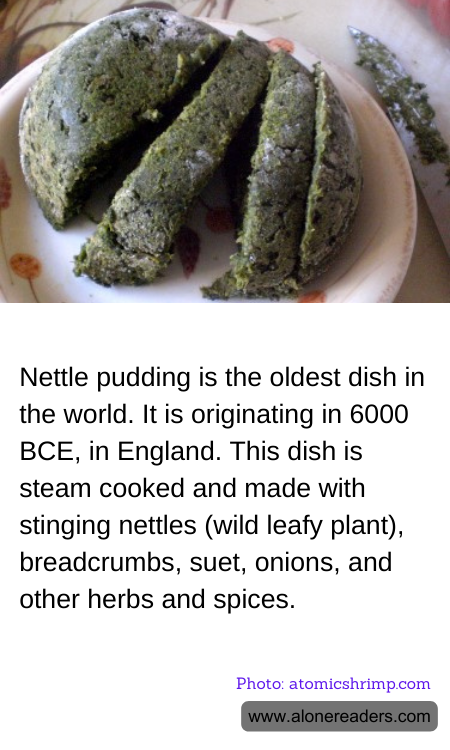
Nettle pudding, recognized as potentially the oldest dish in the world, traces its origins back to around 6000 BCE in England. This ancient cuisine underscores the resourcefulness of early humans in utilizing available natural ingredients such as stinging nettles. Nettles, which are often seen merely as a weed, have been valued throughout history for their nutritional content and health benefits, including high levels of vitamins A and C, iron, potassium, manganese, and calcium.
The traditional method of preparing nettle pudding involved gathering young, tender nettles during the spring when they are at their most nutritious. These nettles would be carefully washed and then mixed with other accessible ingredients such as onions, which were cultivated or gathered wild, and suet, a type of raw beef or mutton fat. Breadcrumbs would also be added to the mixture, serving as a binder and adding a slight texture to the dish. Herbs and spices found in the wild or grown in early gardens would be incorporated to enhance the flavors.
Cooking nettle pudding typically involved steaming the mixture, often wrapped in cloth and placed in simmering water or cooked in the hot embers of a fire. This method of cooking ensured that the flavors melded together while retaining the nutritional value of the ingredients. The result was a hearty, satisfying dish that could be served as a part of larger meals or consumed on its own.
Despite its ancient roots, nettle pudding is more than just a historical curiosity. It remains relevant in contemporary times, especially amid growing interest in foraging and using sustainable, local ingredients. Modern versions of the dish can be adapted by incorporating contemporary ingredients and spices, yet the fundamental simplicity and nourishing qualities of this ancient recipe still appeal to those looking to connect with historical culinary practices. Furthermore, the resurgence in the popularity of nettle pudding highlights a wider recognition of the significance of nettles and similar overlooked plants in sustainable diets.
