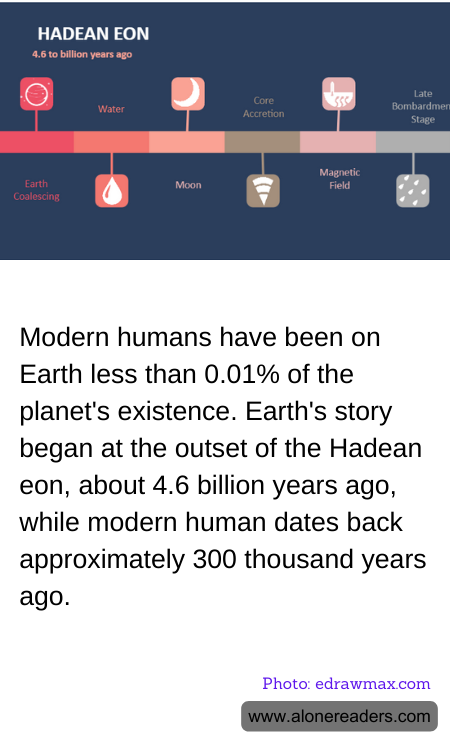
Despite their relatively recent appearance on the timeline of Earth's history, modern humans have had a profound impact on the planet. Earth itself has undergone tremendous changes over billions of years, from its fiery formation in the solar system, through periods marked by the formation of continents, shifts in climate, and mass extinctions that reshaped life multiple times. These vast epochs shaped and shifted by geological, atmospheric, and biological forces provided the backdrop against which humanity eventually emerged.
The most recent sliver of geological time, in which modern humans (Homo sapiens) evolved, represents less than 0.01% of Earth's existence. Originating approximately 300,000 years ago in Africa, Homo sapiens have spread across the globe, demonstrating remarkable adaptability to a wide range of environments. Their abilities to develop language, create complex tools, harness the power of fire, and cultivate agricultural systems allowed them not only to survive but to thrive in diverse and often harsh climates.
Modern humans have also marked the planet in profound and unprecedented ways. Through agriculture, urbanization, and industrialization, humans have altered their surroundings to suit their needs. Forests have been felled, rivers rerouted, mountains mined, and landscapes transformed in the pursuit of resources and living space. The Industrial Revolution, which began in the late 18th century, propelled human societies into new modes of existence that have had far-reaching consequences for the Earth's ecosystems and climate. The combustion of fossil fuels, such as coal and oil, has released vast quantities of carbon dioxide and other greenhouse gases into the atmosphere, contributing significantly to global warming and climate change.
This brief tenure on Earth contrasts sharply with the deep time of the planet’s own history, indicating a period filled not only with human achievements but also with significant challenges and responsibilities. As stewards of the Earth, modern humans have become integral to the ongoing story of the planet, a story that requires careful and informed management of natural resources and ecological systems to ensure sustainability for future generations. The impact of human activity presents contemporary societies with urgent questions about how to balance technological and economic development with environmental conservation and how to redesign systems and structures to be more sustainable and less harmful to the planet they inhabit.
