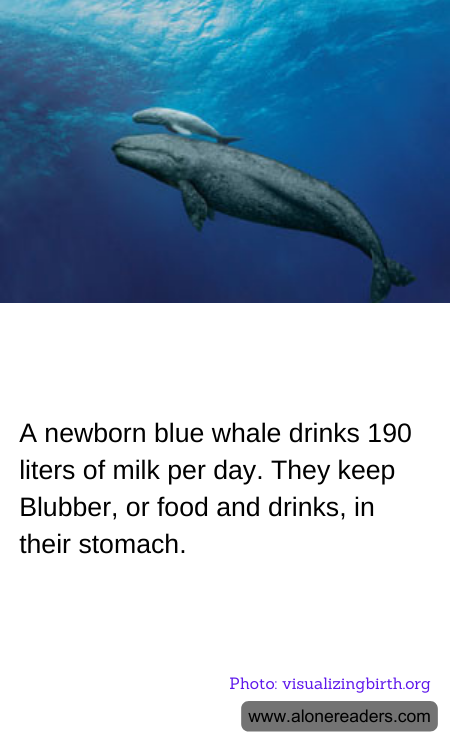
The blue whale, one of the largest animals on earth, exhibits a number of remarkable feeding behaviors and physiological adaptations that support its immense size. One of the most astonishing aspects of blue whale calves is their rapid growth rate, fueled by the consumption of large quantities of their mother’s milk. In their early stages of life, a newborn blue whale drinks approximately 190 liters of milk each day, a figure that highlights the incredible demands of nurturing such a colossal mammal.
Blue whale milk is exceptionally rich and fatty, which is crucial for the calf's development. This rich milk, which has a fat content of about 35-50%, helps the calf rapidly gain the blubber it needs to insulate itself in the cold ocean waters. Blubber, a key adaptation in marine mammals, serves multiple vital functions beyond just insulation. It is an important energy reserve, helping whales survive in oceans where food can sometimes be scarce. Moreover, the blubber helps to streamline the body of the whale, improving its hydrodynamics and enabling it to swim long distances with less energy expenditure.
The early days of a blue whale calf are critical, and their dependency on milk continues for about six months before they gradually transition to solid food. During this period, they can gain up to 90 kilograms a day, an extraordinary rate that marks them as one of the fastest-growing animals on the planet. This rapid growth is essential, as it prepares the young whales for the challenges of ocean life, including lengthy migrations and deep dives to find food.
Understanding the feeding and growth of blue whale calves underscores the remarkable nature of whale biology and highlights the broader ecological dynamics of ocean environments. These gentle giants not only fascinate researchers but also play a significant role in marine ecosystems. Their feeding behaviors influence the distribution and population dynamics of krill and small fish, while their movement through and interaction with the marine environment impacts nutrient cycling. These behaviors exemplify the interconnectedness of marine life and the critical importance of conservation efforts to ensure the survival of species like the blue whale, which continue to face threats from human activities such as shipping and fishing.
