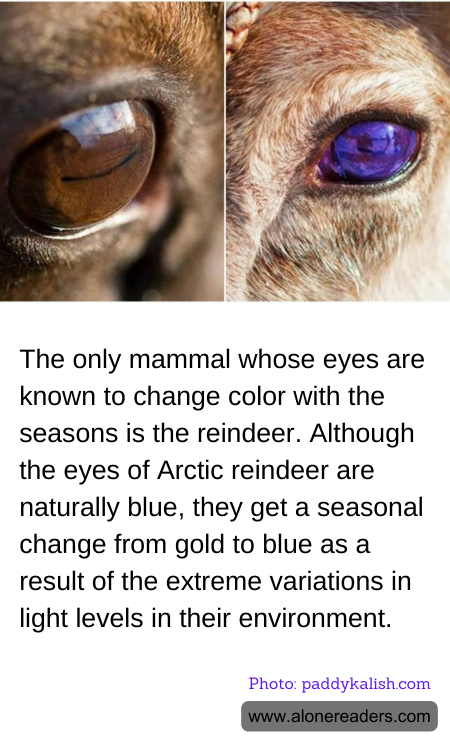
Reindeer, fascinating creatures primarily found in the Arctic regions, possess a unique characteristic unlike any other mammal - their eyes change color with the seasons. This remarkable feature plays a vital role in their adaptation to the drastic fluctuations in light, which occur in their harsh environments. In summer, when the light is abundant, the eyes of the reindeer appear golden. This color helps to reduce the amount of light entering the eye, effectively acting like sunglasses and protecting the eyes from intense light.
As the seasons shift to winter and the region plunges into weeks of darkness, the reindeer's eyes shift to a striking blue hue. This change significantly increases the internal reflection of light within the eye, thereby improving the reindeer's ability to see in the dark, crucial for their survival in the low-light conditions. This distinct color change is facilitated through physical alterations in the structure of the collagen within the eyes of the reindeer.
The layers of the reindeer's eyes shift thickness, altering how light is scattered and consequently the color reflected. These unique adaptations not only underscore the incredible evolutionary advancements of the species but also contribute significantly to their ability to traverse vast and variable terrain, forage for food, and avoid predators. The changing eye color of the reindeer is not only a fascinating biological phenomenon but also a vivid reminder of the intricacies and wonders of the natural world, specifically tailored to the survival needs of the species. Thus, the reindeer continues to captivate scientists and nature enthusiasts alike with its splendid adaptation to one of the most extreme environments on the planet.
