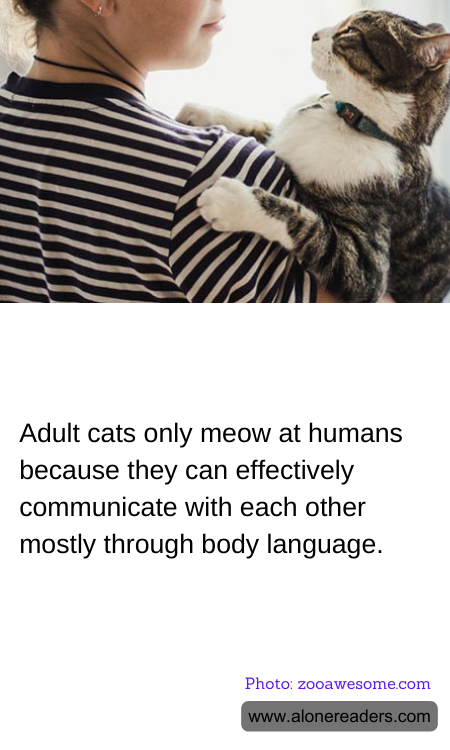
Cats, known for their mysterious and independent nature, have a unique way of communicating with humans that is fundamentally different from how they interact with each other. Adult cats typically use meowing as a primary form of communication exclusively with humans, not with other cats, as one might assume.
In the wild and amongst themselves, cats rely heavily on body language and other forms of vocalization for communication. This includes purring, hissing, growling, and yowling, each serving specific emotional states and intentions, from expressing contentment to threatening an intruder. Visual signals such as the positioning of ears, tail movements, and overall body posture also play essential roles in conveying messages among felines.
However, when it comes to interacting with humans, cats often resort to meowing, a behavior seldom displayed in the wild or among other cats in more natural settings. This adaptation is particularly fascinating because it suggests a form of interspecies communication evolution. Kittens meow to demand attention, food, or care from their mothers, but this vocalizing behavior typically diminishes as they grow into adulthood and become more self-sufficient. Yet, domestic cats continue to use meowing as adults but tailored specifically to their human companions. This ongoing vocal behavior may be indicative of cats' recognition of humans not just as caregivers but also as socially intelligent beings who respond to vocal cues.
Scientists believe that cats have developed this meowing behavior as an effective tool to communicate with humans because it works exceptionally well in getting our attention. Each cat may develop a unique set of meows, somewhat personalized to communicate their needs and desires to their specific human handlers, from indicating hunger to demanding attention or expressing discomfort.
Moreover, this aspect of feline behavior underscores the depth of the bond between cats and humans—an evolutionary development fostered by thousands of years of domestication. While cats are often seen as aloof and self-reliant animals, their capability to develop specialized means to communicate with humans suggests a mutual understanding and adaptability that goes beyond mere cohabitation.
Understanding this unique communication style not only helps cat owners better meet the needs of their feline friends but also enriches the relationship between them. Recognizing what different meows mean can help in providing better care and strengthening the affectionate bond that makes cats cherished companions in many homes around the world.
