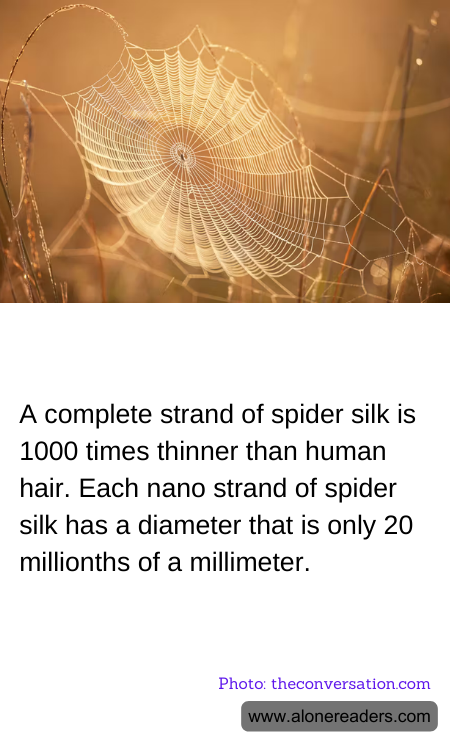
Spider silk, a material renowned for its remarkable properties, is an extraordinary example of nature's ingenuity. Each strand of spider silk is astonishingly fine, being about 1000 times thinner than a human hair. To put this into perspective, the diameter of a nano strand of spider silk measures merely 20 millionths of a millimeter. This extreme thinness, however, does not compromise its strength; spider silk is famously known for its formidable tensile strength, which is comparable to that of steel.
The impressive qualities of spider silk encompass more than just its strength. It is also highly flexible, capable of stretching up to five times its initial length without breaking. This combination of strength and elasticity makes it an incredibly durable material. Additionally, spider silk exhibits excellent thermal properties and can maintain its integrity in various environmental conditions, making it resilient to fluctuations in temperature and humidity.
The applications of spider silk are vast and varied, ranging from biomedicine to textiles. In the medical field, researchers are exploring the use of spider silk in creating more biocompatible sutures for wound healing, given its non-toxic and biodegradable nature. Furthermore, its potential uses extend to the development of artificial ligaments and tendons, which could revolutionize reconstructive surgeries. In the textile industry, spider silk's lightweight and robust nature is harnessed to create materials that are both high performance and sustainable, appealing to an environmentally-conscious market.
The method of producing spider silk on a large scale remains a challenge, as spiders are territorial and cannibalistic, making farming them impractical. However, scientists and biotech companies have been developing synthetic spider silk using genetically modified organisms such as bacteria, yeast, and plants. These innovative approaches aim to recreate the silk proteins that spiders produce, enabling the mass production of spider silk without the need to farm actual spiders.
As research and technology continue to advance, the potentials for spider silk are expanding into areas like aerospace, military, and automotive industries, where its unique properties could lead to the development of new, lightweight, and high-strength materials. The ongoing exploration and manipulation of spider silk's properties not only demonstrate the profound capabilities of natural materials but also highlight the importance of interdisciplinary research in unlocking new scientific and industrial applications.
