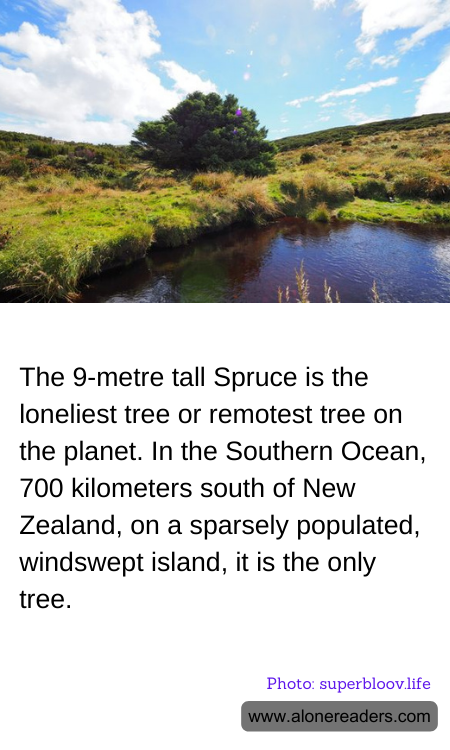
In the midst of the vast expanse of the Southern Ocean, a solitary figure stands resilient against the relentless winds and sparse conditions of Campbell Island, located approximately 700 kilometers south of New Zealand. This lone sentinel is not just any tree—it is a 9-meter tall Sitka spruce, distinguished not only by its height and robust demeanor but also by its unique status as the planet's most isolated tree.
The story of how this solitary spruce came to thrive in such a remote and inhospitable environment is as captivating as the tree itself. It was planted in the early 20th century by Lord Ranfurly, the Governor of New Zealand, who introduced the tree to Campbell Island as part of an attempt to afforest the island. The idea was that trees could provide shelter from the prevailing harsh weather for other activities, such as farming, which was later deemed unviable due to the island's harsh climatic conditions.
Despite the failure of these human ventures, the spruce continued to grow, towering over the grassy, treeless landscape of the island. Without any competitors or threats from other trees or larger vegetation, the spruce stands as a testament to resilience and survival. Its existence defies the odds, thriving in a place few other trees could survive, thanks to its unique genetic adaptation and robust nature.
Biochemically, the tree has adapted to its environment in fascinating ways. Its isolation had led to some unique ecological dynamics; for example, it supports limited bird life and hosts a specific range of insects and mosses that have also adapted to the harsh conditions of the island. This tree is not just a botanical anomaly; it is an ecosystem unto itself, supporting a range of life forms that have all adapted to one of the most remote environments on Earth.
The presence of the Sitka spruce on Campbell Island raises intriguing questions about resilience, adaptation, and the interconnections between species. As researchers continue to study this unique tree, they gain insights not just into the biology of trees, but also into the broader ecological impacts of isolation. The "world's loneliest tree" thus serves as a poignant symbol of survival and adaptation against overwhelming odds, providing profound lessons on the resilience of life in all its forms.
