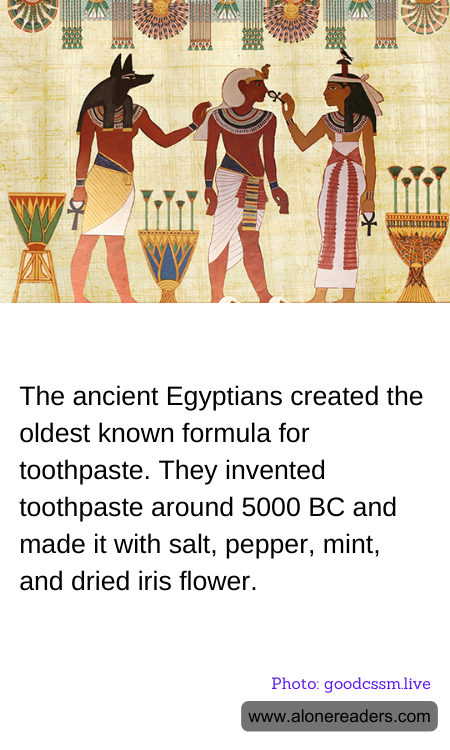
Ancient Egyptian civilization, long recognized for its monumental achievements in various fields like architecture, mathematics, and art, also ventured into personal hygiene, crafting the world’s oldest known formula for toothpaste around 5000 BC. This predates the introduction of toothbrushes by several millennia and highlights the Egyptians' pioneering approach to dental care. The Egyptians were highly concerned with oral hygiene, as evidenced by their elaborately formulated toothpaste, which, although rudimentary by today’s standards, was revolutionary at the time.
The ingredients they used were not only abrasive enough to clean teeth but also had properties that promoted fresh breath and reduced gum disease. Key components included salt, which served as a scrubbing agent; pepper, believed to have antibacterial properties; mint, used for its fresh scent and cooling sensation; and dried iris flower, which recent studies suggest has beneficial effects on gum health. This concoction was ground and mixed into a paste that could be applied to the teeth.
Despite its seemingly harsh contents, the Egyptian toothpaste was effective enough to warrant use by wealthy individuals and noble persons who placed a high value on maintaining their dental health and ensuring fresh breath. The significance of such formulations is underlined by the fact that Egyptians also suffered from dental problems due to their diet, which was heavy in coarse grains that led to significant tooth wear.
The invention of toothpaste by the ancient Egyptians represents an early understanding of the importance of dental care and highlights their innovative spirit—a trait that has made their civilization the subject of admiration and study throughout history. Even today, the basic principles established by their rudimentary toothpaste find echoes in the more sophisticated versions we use: abrasives to clean, flavors to freshen, and compounds to promote overall oral health. This ancient concoction underscores the ingenuity of a civilization that, millennia ago, recognized the importance of dental care, laying the groundwork for the modern practices we employ today.
