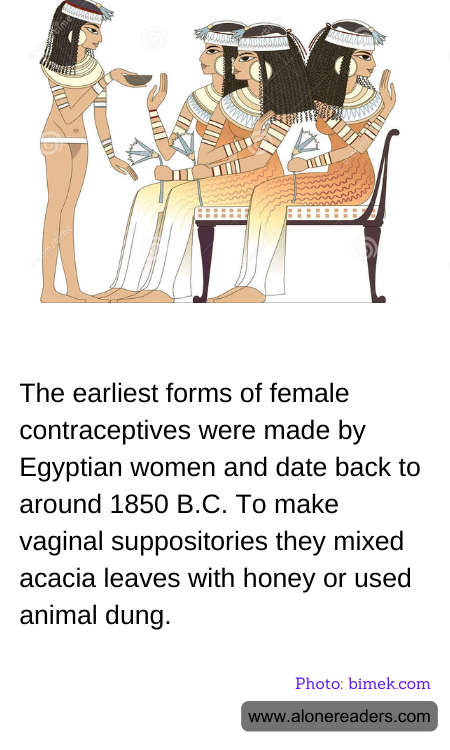
Long before the advent of modern medicine, ancient civilizations were actively engaged in creating methods to control birth and manage reproductive health. Among the earliest known contraceptives, Egyptian women ingeniously crafted their forms of birth control using locally available materials. These initial attempts date back to around 1850 B.C., a time when understanding of the human body was empirical and intertwined with the threads of mysticism and emerging science.
Egyptian women utilized a variety of substances believed to have contraceptive properties in their formulations. Notably, they mixed acacia leaves with honey to create vaginal suppositories. Acacia contains significant levels of lactic acid, a substance known today for its spermicidal properties, which suggests their choice was not merely based on availability but also on observational knowledge of its effectiveness. This mixture would form a paste that, when inserted vaginally, was thought to act as a barrier and spermicide, thereby decreasing the likelihood of conception.
Moreover, animal dung, particularly from crocodiles, was another material used in these ancient contraceptives. The dung would be combined with other substances and shaped into pessaries. While the thought of using dung might seem off-putting by modern standards, the high ammonia content in the excrement was likely recognized for its spermicidal effects. This indicates an astute observation of the materials at their disposal and raises the possibility that there was an empirical understanding of chemical properties that could be harnessed for birth control.
These early practices underscore a significant aspect of historical contraception: the autonomy and inventive spirit of women in managing their fertility using the means available to them. This exploration also highlights the intertwined relationship between humans and their environments, leveraging natural resources to fulfill communal and personal needs.
While far removed from the sophisticated contraceptive technologies available today, the efforts of these pioneering Egyptian women laid foundational ideas that resonate through time. They not only managed to employ what was on hand but did so in a way that sparks admiration for their ingenuity and understanding of their world. These ancient methods, seen through the lens of history, reflect a profound attempt to control fertility and, by extension, influence the socio-cultural fabric of their time.
