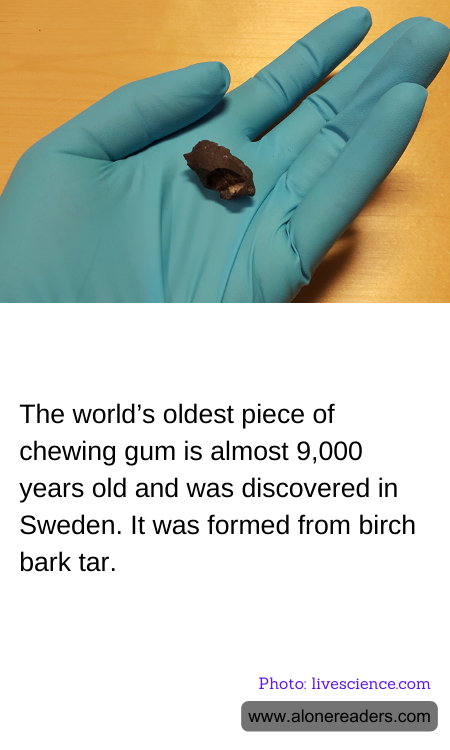
The world of ancient artifacts is replete with fascinating discoveries that provide insight into the daily lives of our ancestors, such as the world's oldest piece of chewing gum. This prehistoric piece of gum is a stunning 9,000 years old. It was unearthed in Sweden and is made from birch bark tar, a substance that has been used by ancient humans not only for chewing but also for medicinal purposes and as a glue.
The discovery of this ancient chewing gum is significant because it offers a unique glimpse into the habits and health of prehistoric people. Birch bark tar contains antiseptic properties, which is believed to have helped ancient populations in managing dental infections and maintaining oral health. Additionally, the act of chewing this substance was likely a method for staving off hunger, freshening the breath, and soothing toothaches.
Analysis of this ancient gum has also offered archaeologists much more than just insights into the personal hygiene habits of early humans. Impressions of teeth found on some pieces of birch bark tar gum have provided valuable information regarding the dietary practices and the age and health of individuals who chewed them. In some cases, researchers have even extracted DNA from these impressions, which has opened up new avenues for understanding the genetic background, migration patterns, and social structures of ancient populations.
The find underscores not only the ingenuity of our ancestors, who utilized natural resources for a variety of everyday uses but also highlights the importance of seemingly mundane objects in piecing together the broader narrative of human evolution and culture. Discoveries like these are integral in the field of archaeology, offering snapshots of human history preserved in the most unlikely of sources.
