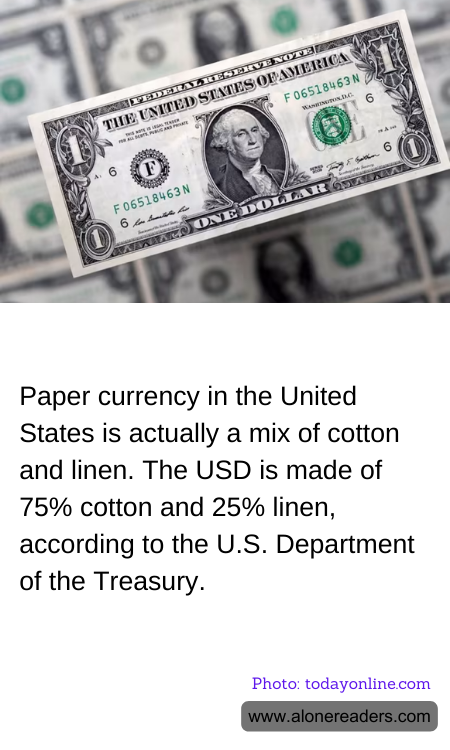
Paper currency, particularly the United States Dollar (USD), is much more complex in its composition than one might initially think. Unlike common paper that comes from trees, U.S. currency is crafted from a durable blend of cotton and linen. This mix consists of 75% cotton and 25% linen, a formulation that the U.S. Department of the Treasury has found to offer the optimum balance between durability and practicality.
This unique composition helps to give the currency a distinct feel and longevity that conventional paper cannot provide. Currency notes need to withstand the rigors of daily handling, including being folded, crumpled, and exposed to various environmental elements without disintegrating like typical paper would. The use of cotton and linen makes U.S. bills less likely to tear and allows them to be washed and ironed by individuals without substantial degradation, adding to their lifespan.
Interestingly, this material choice also incorporates tiny blue and red synthetic fibers, which are visible upon close inspection. These are not just aesthetic enhancements but are part of sophisticated anti-counterfeiting measures, designed to be easily recognizable to the trained eye but difficult for counterfeiters to replicate accurately.
Furthermore, these materials contribute to the feel of the banknotes. Many people can distinguish a real banknote from a fake one simply by touching it. The distinctive texture, combined with other high-tech features like watermarks, security threads, and color-shifting inks, make U.S. currency a marvel of modern printing technology.
The decision to use such materials dates back to the origins of the currency itself, with cotton and linen being chosen for their availability and the technological limitations of the time. Over the years, despite advances in synthetic materials, the treasury has maintained this traditional composition to preserve the tactile familiarity and trust that people have in U.S. currency.
This intricate combination of materials in U.S. currency is not just a matter of tradition but a sophisticated choice that balances historical practices with modern technological needs, ensuring that U.S. banknotes remain both secure and durable in the face of everyday use and advanced counterfeiting attempts.
