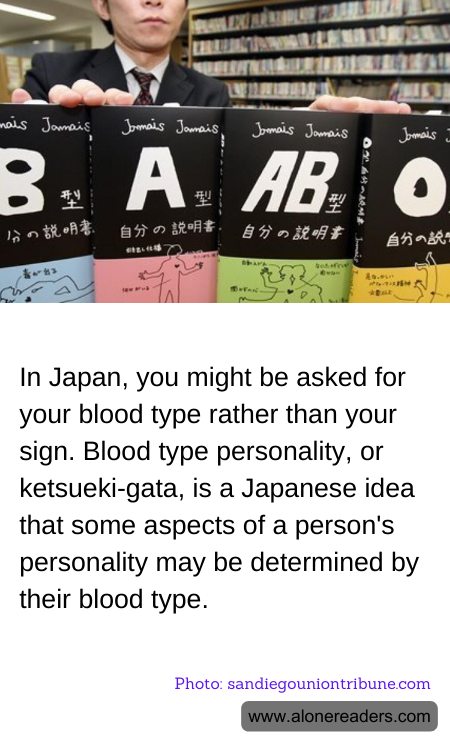
In Japan, the concept of blood type personality theory, or ketsueki-gata, holds a similar place in popular culture as astrology does in many Western countries. It’s not unusual for Japanese people to be asked their blood type in various contexts, including while socializing and even in job interviews. This belief systemsuggests that a person's blood type can determine their personality traits, compatibility with others, and even certain aspects of their health and diet.
The theory took root in Japan in the 1920s after the publication of a paper by Takeji Furukawa, a professor at Tokyo Women's Teacher's School. He proposed that there were temperamental differences among people of different blood types. Although his ideas were initially criticized and deemed unscientific by the academic community, they gained immense popularity among the general public over time.
The general stereotypes associated with each blood type are distinct. Type A is often thought to signify a meticulous, sensible, and sensitive personality, but also one that is over-anxious. Type B is associated with creativity, enthusiasm, and strong individuality, but also with unpredictability and selfishness. Type AB, having traits supposedly drawn from both A and B blood types, is seen as rational and calm, yet sometimes aloof and indecisive. Lastly, Type O is believed to reflect confidence, ambition, and leadership, yet also a propensity for arrogance and ruthlessness.
These characteristics are thought to influence how people relate to one another. For instance, in a romantic context, a person with Type A blood might potentially be more compatible with an individual of Type O rather than one of Type B. Beyond interpersonal relationships, these blood type stereotypes can extend into the professional realm, where certain traits may be seen as more suitable for particular roles or careers.
Despite its widespread acceptance and the fun, conversational aspect it adds to social interactions, the scientific community does not support the validity of blood type personality theory. Critics argue that it is a form of pseudoscience, emphasizing that no empirical evidence sufficiently backs the correlation between blood type and personality.
Nevertheless, the theory remains a popular aspect of Japanese culture, akin to horoscopes in the West, providing a framework for personality analysis, social interaction, and entertainment. It is a testament to how cultural differences shape the ways in which societies try to understand human nature. Thus, while it may not have a basis in science, the concept of ketsueki-gata continues to be a charming and integral part of Japanese social customs.
