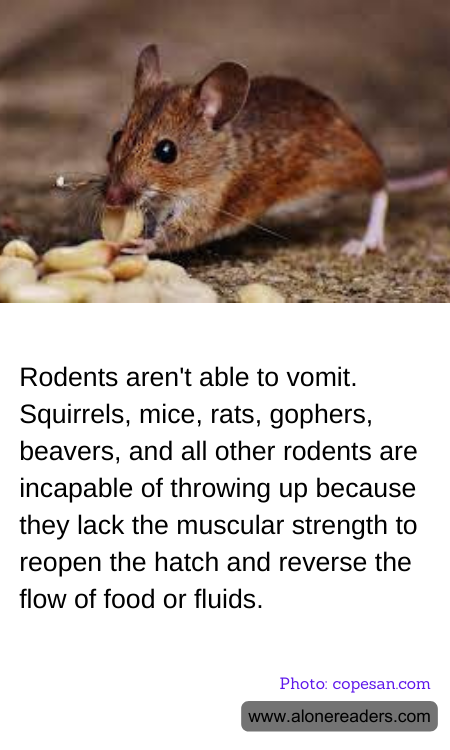
Rodents, despite being common and widespread creatures, display a surprising physiological limitation: they are unable to vomit. This characteristic extends across various species within the rodent family, including squirrels, mice, rats, gophers, and beavers. The reason behind this inability lies in their anatomy; specifically, rodents lack certain neural circuits that facilitate the vomiting reflex, as well as the muscular strength in their diaphragm and stomach necessary to force contents up the esophagus and out of the mouth.
The inability to vomit has significant implications for how rodents handle toxins and other harmful substances that they might ingest. Unlike many other animals that can expel ingested poisons or spoiled foods through vomiting, rodents must rely on their highly efficient digestive systems to process and eliminate these toxins. Furthermore, their fast metabolism helps them to rapidly metabolize potentially harmful substances, reducing the risk posed by their inability to vomit.
Moreover, the design of a rodent's digestive system further explains this phenomenon. The structure of the stomach, which includes a powerful lower esophageal sphincter, prevents the backflow of food and acid into the esophagus. This feature, while effective at preventing acid reflux, also physically constrains them from expelling stomach contents. Additionally, rodents also lack the brainstem mechanism that controls the vomiting reflex, which is present in most other mammals.
This peculiar trait of rodents has influenced their eating behaviors and habitat preferences. They tend to be cautious with new foods and often consume small amounts when encountering a novel food source, a behavior known as neophobia. This strategy allows them to test unfamiliar foods for potential toxicity without risking significant harm, compensating for their inability to vomit if something proves harmful.
Understanding the limitations and adaptations of rodents in relation to their inability to vomit not only provides intriguing insights into their biology but also highlights the diverse ways in which evolution shapes bodily functions and animal behavior. This knowledge is particularly useful in pest management and in understanding the ecological roles of these prolific creatures.
