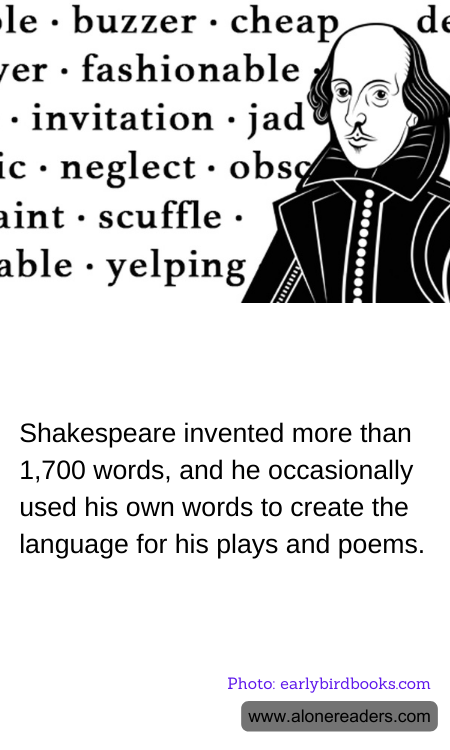
William Shakespeare, often hailed as the greatest playwright in the English language, made an indelible mark on English literature and language. One of his most remarkable contributions was his introduction of an estimated 1,700 words to the English language. The Bard, as he is commonly known, had a knack for coining phrases and words that were incredibly expressive and apt for the dramatic scenarios he envisioned. His inventive use of the English language not only enriched it but also made his texts vibrant and engaging for audiences.
Shakespeare's word inventions were typically rooted in his deep understanding of human emotions, social interactions, and the natural world. He crafted his vocabulary by converting nouns into verbs, changing verbs into adjectives, connecting words never before used together, adding prefixes and suffixes, and devising words entirely from scratch. This inventive process resulted in the creation of words such as "eyeball", "fashionable", and "lonely". Many of these words are so seamlessly integrated into contemporary English that most speakers are unaware of their Shakespearean origins.
Moreover, his plays and poems did more than merely introduce new words; they enriched the language with vivid imagery and complex characters, thus expanding the expressive capacity of English. Through his works, he explored themes of love, power, jealousy, betrayal, and the supernatural, which resonated with his audiences and readers, past and present. Shakespeare’s linguistic creativity was not merely a matter of lexical innovation but also involved the way he structured sentences and employed metaphor and rhythm to achieve dramatic effect.
Shakespeare's legacy in the sphere of language is profound. His works encourage linguistic and artistic creativity, reminding us of the power of language to captivate, entertain, and reflect the complexities of human life. His contributions go beyond theater and literature and entail a significant evolution in the English language itself. This uncanny ability to mold the English language to suit the needs of his art and his audience remains unmatched, underscoring his genius and everlasting impact on English literature and language.
