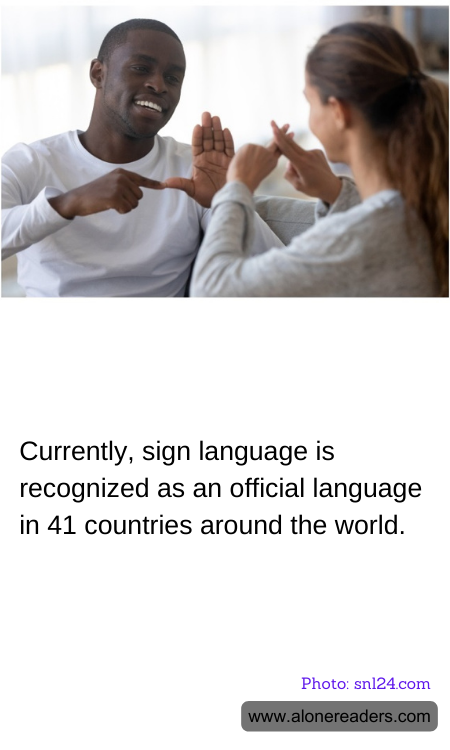
Sign language, often misconceived merely as a tool for the deaf, is in fact a rich, nuanced means of communication fully deserving of its official language status in 41 countries. This widespread recognition reflects a growing understanding of the importance of inclusivity in linguistic policy and an appreciation of cultural diversity. Each sign language, like spoken languages, has its own rules for phonology, morphology, syntax, and pragmatics, and each evolves over time within its community. Just as English differs from Mandarin, American Sign Language (ASL) is distinct from British Sign Language (BSL)—an important reminder that "sign language" is not a universal medium.
The acknowledgement of sign languages as official languages is not just a symbolic act; it carries substantial implications for policy and public services. In countries where sign language has been given official status, governments are often required to provide public materials in sign language, including education, legal proceedings, and healthcare, which helps ensure that deaf individuals can fully participate in society. This accessibility is crucial for upholding the rights and dignity of the deaf community.
Moreover, recognizing sign language as an official language helps to challenge and reduce the stigma often associated with deafness and disability. It emphasizes that deaf individuals are not disabled by their physical inability to hear but rather by societal barriers to full participation—and that these barriers can be dismantled through inclusive practices and policies.
Educational systems in countries recognizing sign languages often must adapt to include these as a core part of their curriculum. Such initiatives not only benefit deaf students but also encourage hearing individuals to learn sign language, promoting greater inclusivity and understanding across both communities.
However, while the official recognition of sign language in 41 countries marks significant progress, there remains much work to be done globally. Many countries still do not recognize sign language legally, leaving their deaf communities without support and facing significant communication challenges. Advocates continue to push for broader recognition and for equal opportunities for deaf individuals worldwide, highlighting the essential role that language plays in personal and communal development.
As we move forward, the continued expansion of official recognition of sign languages will likely play a crucial role in shaping more inclusive societies. This not only enhances the lives of those within the deaf community but enriches the cultural tapestry of nations by acknowledging the depth and diversity of all forms of communication.
