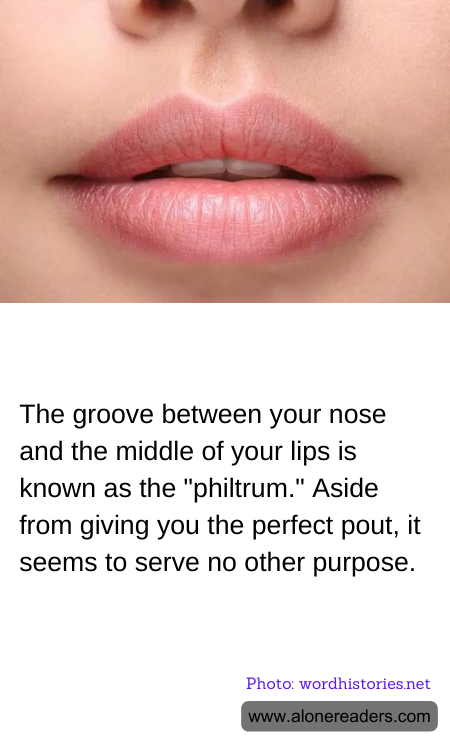
The philtrum, a vertical indent running from the base of the nose to the center of the upper lip, is one of those facial features that often goes unnoticed unless highlighted by the sun or a particularly vivid lipstick. Originating from the Greek word "phíltrum," which means "love charm," this feature indeed possesses a subtle allure. Surprisingly, for something so seemingly inconsequential, the philtrum plays a significant role during human development.
Embryologically, the philtrum emerges as a result of complex interplays between various regions of the face. Around the third to fourth month of fetal development, the structure of the face is formed by the merging of three primary sections. These sections grow towards each other, and if they join correctly, they create the philtrum. This fusion is crucial; improper joining can result in facial abnormalities, such as a cleft lip or palate.
Besides its developmental importance, the philtrum also has a functional aspect, albeit a lesser-known one. It plays a role in our facial expressions. The muscle movements associated with the philtrum allow us to perform nuanced expressions, especially those concerning the mouth and lips. This subtlety in expression enhances non-verbal communication, contributing to emotional interactions and social bonding.
Despite these roles, from a strictly biological standpoint in adults, the philtrum does not serve a critical function like other body parts such as the heart or the brain. However, it does contribute to the uniqueness of each human face, influencing personal identity and recognition. In some cultures, a prominent philtrum is considered aesthetically pleasing and is associated with attractiveness and vitality.
In summary, while it may appear that the philtrum serves "no other purpose" beyond influencing our appearance, its presence is a testament to the intricate processes involved in human development. It not only aids in oral expressions but also stands as a silent witness to the complex genetic and embryologic choreography that shapes our very beings. In this light, the philtrum is more than just a simple groove; it's a subtle yet powerful symbol of life's intricate design.
