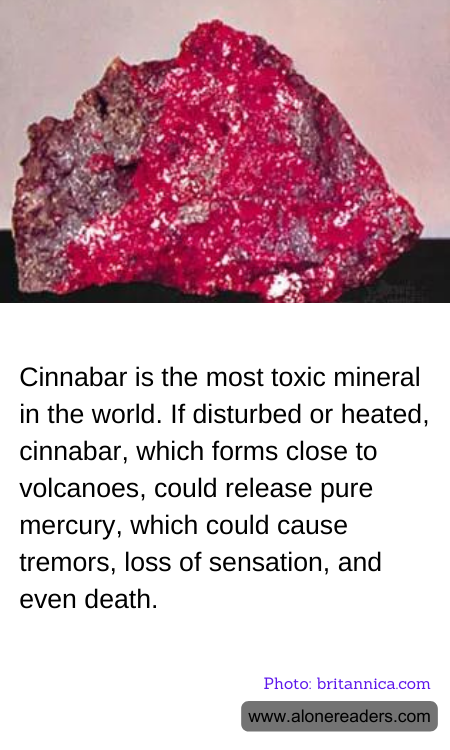
Cinnabar, known for its striking red hue, holds the notorious title of being the most toxic mineral on the planet. Primarily composed of mercury sulfide (HgS), cinnabar is commonly found near volcanic regions where hot gases bring the mineral to the earth's surface. Its unique color and brilliance have historically made it popular for use in jewelry and as a pigment in art. However, the dangers associated with cinnabar are significant and have been known for centuries.
The primary risk of cinnabar arises from its high mercury content. When the mineral is disturbed, either through mining activities or natural erosion, or if it is heated, it can release elemental mercury—a potent neurotoxin. Inhalation of mercury vapors can lead to severe health issues, including tremors, sensory impairment, and emotional instability. Prolonged exposure can cause significant neurological damage and ultimately be fatal.
Despite these dangers, cinnabar has been used throughout history in various applications. In ancient times, it was ground into a powder to create vermillion, a deep red pigment that was highly prized in Chinese and Indian civilizations for spiritual and artistic purposes. The Romans used cinnabar in their beautiful frescoes, some of which can still be seen today. However, the toxic nature of mercury was not always fully understood, and many artists and miners suffered from mercury poisoning as a result of their exposure to cinnabar.
Today, the use of cinnabar is highly regulated, and it is mostly found in scientific settings or collected by mineral enthusiasts who are aware of its safe handling procedures. Despite its beauty, the risks associated with handling cinnabar are a stark reminder of the dangers lurking in some of nature's most captivating creations. Therefore, while cinnabar continues to fascinate scientists and artists alike, extreme caution is advised when dealing with this toxic mineral to prevent any health hazards associated with mercury exposure.
