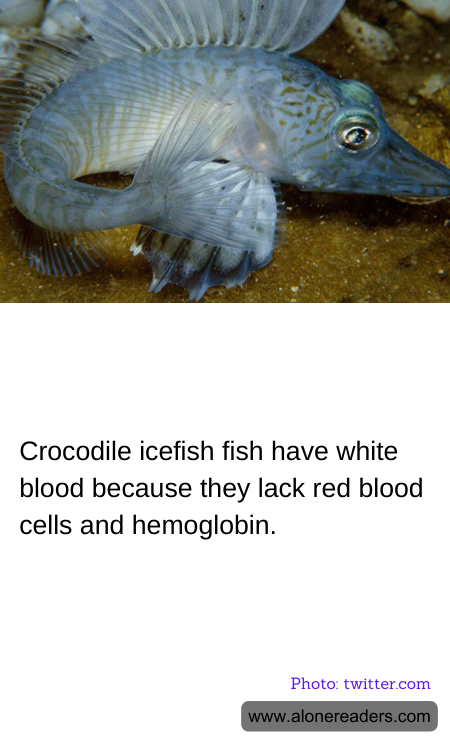
Crocodile icefish, residing in the icy waters of the Antarctic, present one of the most unusual biological adaptations found in the animal kingdom: white blood. Unlike every other vertebrate, crocodile icefish lack red blood cells and hemoglobin, the iron-containing protein responsible for the red color of the blood and crucial for transporting oxygen throughout the body. This absence might seem disadvantageous, as red blood cells are fundamental for supplying organs and tissues with the oxygen necessary for survival.
The crocodile icefish has evolved a unique method to survive in its frigid habitat, where temperatures are so low that oxygen is more soluble in water. The crystal-clear blood of these fish contains a high concentration of dissolved oxygen, allowing them to absorb what they need directly from the water through their skin, bypassing the typical respiratory system mechanism seen in other fish. This method is so efficient in the icy waters that the presence of hemoglobin becomes unnecessary, and the energy-intensive process of producing red blood cells is avoided.
Moreover, the lack of red blood cells reduces the blood's viscosity, enabling it to flow more easily and reducing the energy needed for circulation, which is another beneficial adaptation for living in cold environments. This unique circulatory adaptation also allows the icefish to conserve energy, which is vital in the nutrient-sparse waters of Antarctica. In addition to their peculiar blood, crocodile icefish have larger hearts and expanded vascular systems to facilitate the effective distribution of oxygen throughout their body.
The crocodile icefish's unique characteristics provide a compelling example of how organisms can evolve in extreme environments. Their adaptation challenges our understanding of what is required for life and opens up possibilities for studying the limits of physiological adaptation. Additionally, research into their unique blood and circulatory system could lead to new insights into medical conditions related to blood circulation and oxygen delivery in humans. Reflecting on these remarkable fish not only expands our understanding of biodiversity but also underscores the adaptability of life in the most inhospitable conditions on Earth.
