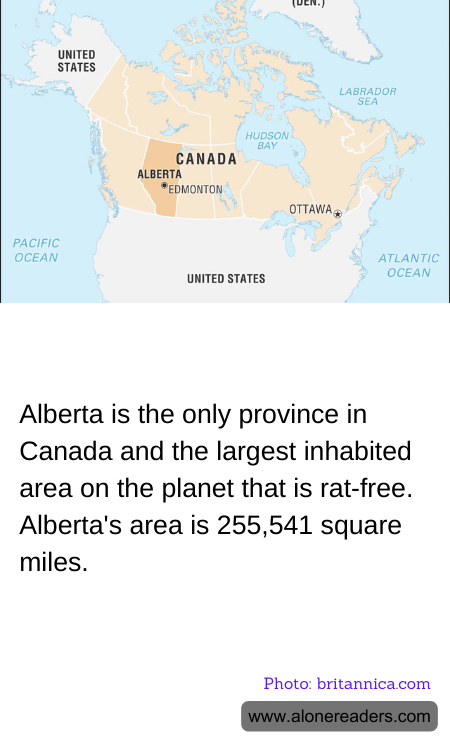
Alberta, the westernmost of Canada's Prairie Provinces, stands out as an exceptional region due to its remarkable status as the largest inhabited rat-free area worldwide. Spanning a vast 255,541 square miles, this expansive territory has managed to maintain a virtually rat-free environment through vigorous and highly coordinated eradication efforts.
The successful exclusion of rats from Alberta can be traced back to the 1950s, when the presence of these rodents was first noted, prompting immediate and concerted action from provincial authorities. By enforcing strict regulations and implementing a comprehensive rat-control program, Alberta has effectively prevented the colonization of these pests. The backbone of this program involves intensive surveillance, strategic baiting, and immediate eradication of any rat sightings, coordinated by dedicated pest control teams.
Central to Alberta's success is the unique geographical advantage provided by its landscape and climate, which naturally limits the migration and survival of rats. Additionally, the province's robust agricultural industry, which would be vulnerable to the disruptive impact of such pests, has been a major motivator in maintaining stringent control measures. The prosperity of this sector is critical to the local economy, underscoring the importance of the rat-free status not only for ecological reasons but also for economic well-being.
Public cooperation and compliance with strict waste management and property maintenance laws also play crucial roles in keeping Alberta rat-free. Residents are generally well-informed about the importance of rat control and are active participants in preserving this status through vigilance and reporting any suspicious activities that may hint at rat infestations.
Alberta’s rat-free status is not only a public health achievement but also a cultural phenomenon, often instilling a sense of pride among Albertans. It effectively showcases how dedicated efforts, community engagement, and strategic public policies can control and eradicate what is typically an unavoidable part of urban and rural life in most parts of the world. This unique distinction contributes to Alberta’s identity and offers a model of environmental management that other regions might seek to emulate in their own pest control efforts.
