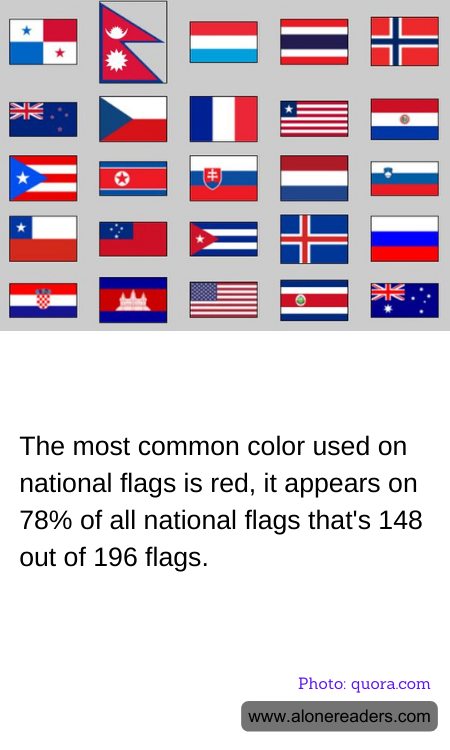
Red is the most predominant color found on national flags around the world, appearing on 78% of them. This striking statistic highlights how 148 out of 196 countries incorporate the bold and powerful color into their flags. The prevalence of red can be attributed to its historical, cultural, and emotional significance, which resonates with many nations' identities.
Historically, red has been used in flags to represent valor, bravery, and strength. These are qualities that are universally revered and are often essential to a nation's founding or continued success. Many countries, during their struggles for independence or in their efforts to unite their people, have adopted red to symbolize the sacrifices and courage of their citizens. For instance, the red in the United States flag represents valor and bravery, while in the flag of Nepal, it symbolizes the bravery of their national heroes.
Culturally, red is also a color of power and spirituality. In many Asian countries, red is considered a lucky color, symbolizing good fortune and joy. This is evident in the flags of countries like China and Vietnam, where red is dominant, reflecting not only the historical aspects of communism but also the cultural positivity associated with the color. Conversely, in some African and European countries, red stands for the blood shed in their fight for independence, serving as a powerful reminder and a symbol of respect for their history.
Emotionally, red is a vibrant color that demands attention and invokes strong feelings. It can stimulate feelings of passion and excitement, making it an effective color for a flag, which often acts as a rallying point for national pride and unity.
Despite these positive connotations, red also holds some negative associations. In some contexts, it can represent danger or warning, which might explain its use in several national flags as a symbol not only of the strength and sacrifice but also to signify alertness and readiness to defend.
The use of red in the vast majority of the world’s flags underscores its deep and versatile symbolism. This color, capable of invoking the most intense emotions and reactions, continues to fly proudly on the flags of many nations, encapsulating their past struggles, cultural richness, and hopes for the future.
