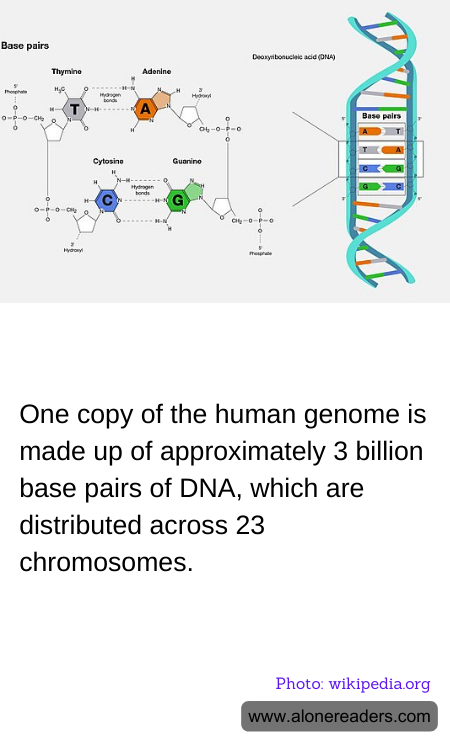
The human genome is a complex and intricately arranged set of genetic instructions fundamental to human development, physiology, and health. Consisting of about 3 billion base pairs of DNA, the genome is organized into 23 pairs of chromosomes. These chromosomes contain all the genetic information needed to create and maintain a human being, from physical appearance to metabolic processes.
Each base pair in the DNA sequence is comprised of a combination of four nucleic acids: adenine, thymine, cytosine, and guanine, often abbreviated as A, T, C, and G. The arrangement of these bases encodes the genetic instructions in genes, which direct the synthesis of proteins. These proteins execute a vast array of functions, such as building cellular structures, facilitating biochemical reactions, and regulating gene expression.
The 23 chromosomes in the human genome include 22 pairs of autosomes and one pair of sex chromosomes, which determine an individual's sex. Males generally have one X and one Y chromosome, while females have two X chromosomes. Each parent contributes one chromosome to each pair, thus half of a person’s DNA comes from their mother and the other half from their (father[4]).
Mapping the human genome was a feat achieved through the Human Genome Project, an international research effort completed in 2003. This project provided a detailed map of the human genome, identifying the location of genes and the sequences of the base pairs. This knowledge facilitates medical research, improving our understanding of diseases, and contributing to personalized medicine. It enables doctors to tailor treatments based on individual genetic profiles, thereby increasing their efficacy and reducing side effects.
Understanding the human genome also has deep implications for fields such as anthropology and evolutionary biology. It allows scientists to trace human lineage and migration patterns, enhancing our understanding of human history and diversity. As research continues to develop, the insights from our genetic makeup hold the promise of revolutionary advancements not only in medicine but in how we understand ourselves as a species.
