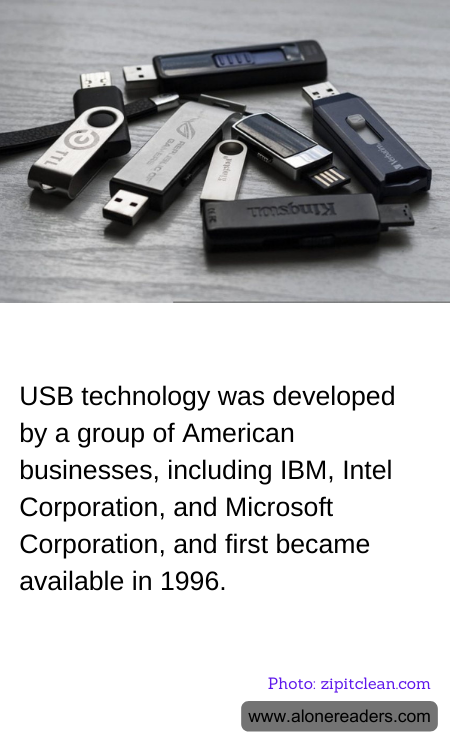
The USB (Universal Serial Bus) technology, which has become a cornerstone in the realm of digital connectivity, was the brainchild of a consortium led by prominent American companies such as IBM, Intel Corporation, and Microsoft Corporation. Officially released in 1996, USB was designed to standardize the connection of peripherals to personal computers, both to communicate with and to supply electric power to them.
USB's development marked a significant evolution in handling data and power connections between devices. Before USB, connecting devices to computers was a much more complex and less standardized process. It typically involved multiple types of connectors and interfaces, which often led to confusion and compatibility issues. USB aimed to resolve these problems by providing a single, streamlined interface that would support a wide range of devices, including keyboards, mice, digital cameras, printers, and external storage devices.
The introduction of USB was transformative. It enabled easier and faster setup of hardware, hot swapping capabilities (the ability to connect and disconnect devices without restarting the computer), and the ability to daisy-chain multiple devices through a single connection. These features greatly enhanced user experience and system usability, thereby fostering a more user-friendly interaction with technology.
USB has evolved through several iterations, each providing significant enhancements in speed and functionality. USB 1.x started with speeds of up to 12 Mbps, which was a vast improvement over previous interfaces. Subsequent versions, such as USB 2.0 and USB 3.0, dramatically increased speed and data transfer rates to 480 Mbps and up to 5 Gbps, respectively. The latest standard as of now, USB4, leverages Thunderbolt technology to provide speeds up to 40 Gbps, showcasing USB's capacity for continual advancement and adaptability to new technological requirements.
The widespread adoption of the USB standard underscores its foundational role in modern technology. Devices and peripherals across a multitude of platforms and systems make use of USB, making it one of the most universally recognized and important technology standards in use today. Its design foresight anticipated many future advances in technology and has ensured that it remains relevant in a rapidly evolving digital world. Environmental consideration is also a part of USB’s innovation, with newer versions including capabilities for improved power management and reduced power usage, which contribute to energy efficiency efforts globally.
As we move forward, the principles upon which USB was founded – interoperability, simplicity, and efficiency – continue to guide its development and ensure that it will remain a critical component of computing infrastructure for the foreseeable future.
