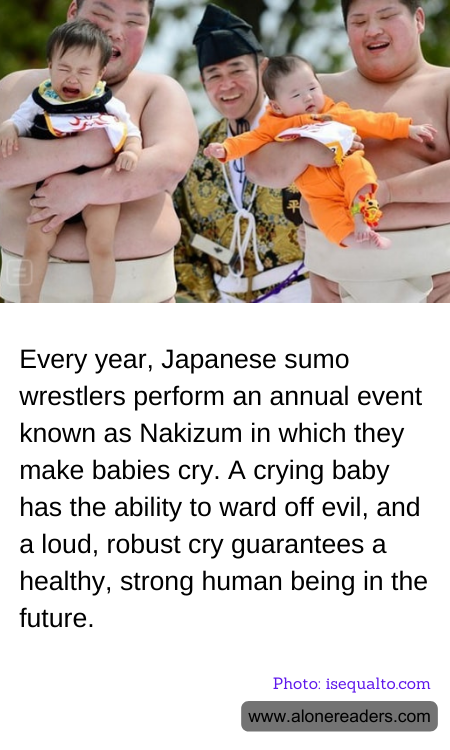
In the fascinating tapestry of Japanese cultural traditions, few are as unique and intriguing as the centuries-old practice known as Nakizumo, or “crying sumo.” This annual event, steeped in Shinto beliefs, involves sumo wrestlers and babies in a ceremony that is both unusual and symbolic. Held at various shrines across Japan, including the famous Sensoji Temple in Tokyo, Nakizumo is a spectacle that draws curious spectators from all over the nation and even from abroad.
The ritual's primary objective is not just to make babies cry but to do so for a deeper, spiritual reason. In Shinto tradition, a baby’s cry is believed to ward off evil spirits and to attract the attention of benevolent ones, ensuring the child’s health and protection. During the ceremony, sumo wrestlers hold babies aloft in a makeshift ring, and a referee is present to oversee the contest. The wrestler’s job is to prompt the babies to cry, often with the help of a masked figure meant to induce fright or by gently shaking their hands. The intensity of the baby’s cry and the duration are often seen as a measure of future health and strength.
An interesting component of Nakizumo is the competition aspect. It is commonly held that the first baby to cry is the winner, under the notion that the first loud cry is a powerful repellant against evil. If both babies begin crying at the same time, the louder and longer cry is declared the victor. The hope is that by crying out loudly, the babies effectively call upon the deities for a life free from misfortune.
This ceremony, although seemingly distressive, is conducted in a profoundly respectful and caring manner. Parents voluntarily bring their children to partake in this ritual, trusting in its beneficial outcomes. The sumo wrestlers, though formidable in appearance, handle the infants with great care and gentleness.
Nakizumo not only serves a spiritual and communal purpose but also provides entertainment and celebration. The atmosphere at these events is festive, filled with music, dancing, and food stalls, making it a joyful family outing. Beyond the tears, it is a celebration of life, growth, and community spirit — key elements in many Japanese festivals.
Despite its ancient roots, Nakizumo has faced its share of controversy in modern times, with opinions divided on the stress it might cause the infants. However, many Japanese families continue to participate in and uphold this tradition, viewing it as a significant rite of passage for their children. As with many cultural practices around the world, Nakizumo thrives on its ability to adapt while preserving the core elements that define its unique character in Japanese heritage.
