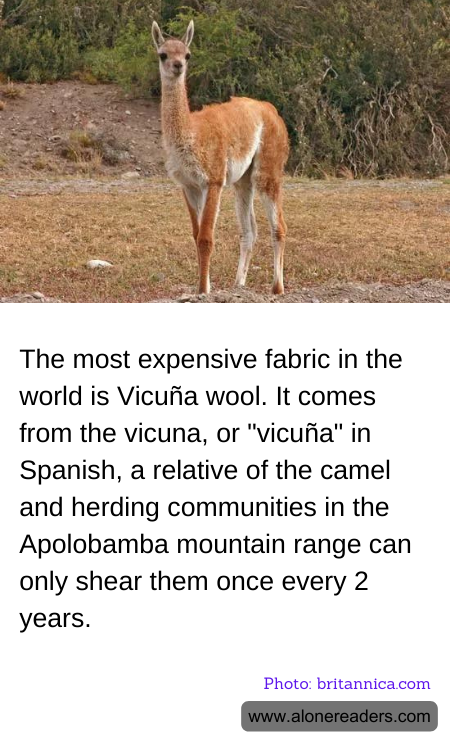
Vicuña wool, recognized as the most expensive fabric globally, originates from a remarkable source—the vicuña, a wild South American camelid. Vicuñas are cousins of llamas and alpacas, dwelling predominantly in the high Andean areas of Peru, Chile, Bolivia, and Argentina. These graceful creatures are notable not only for their elegance but also for producing extremely fine and luxurious wool.
Historically, vicuña wool was reserved for Incan royalty, symbolizing a material of great value and distinction. Unlike other animals, vicuñas cannot be domesticated, so the process of obtaining their wool involves a sustainable and community-oriented approach. The people living in the Apolobamba mountain range practice a traditional method called "Chaccu." This involves herding the animals and shearing them gently once every two years, allowing vicuñas to continue their life in the wild without harm.
The rarity of vicuña wool is not solely due to the infrequency of shearing but also because of the meticulous care taken during the collection and processing of the wool. Each vicuña produces only about 200 grams of wool every two years. Additionally, the fibers of vicuña wool are extraordinarily fine—measuring less than 12 microns in diameter, which is finer than any sheep's wool. This incredible fineness is what gives vicuña fabric its soft texture, unrivaled warmth, and a lustrous quality that makes it highly sought after in the high-fashion industry.
Due to these unique characteristics, vicuña wool commands a high price on the market, often reaching several thousand dollars per yard. The purchase and sale of vicuña products are strictly regulated to protect these animals from poaching and to ensure sustainability. Conservation efforts over the past decades have successfully restored vicuña populations from the brink of extinction, thanks partly to the economic incentives provided by vicuña wool production, which supports local communities.
The sale of vicuña wool not only supports the conservation efforts but also provides significant economic support to the indigenous communities involved in the Chaccu. This sustainable model helps preserve an ancient tradition, ensuring that both the vicuñas and the herding communities benefit from this precious resource. Thus, vicuña wool remains not just the most expensive fabric in the world but also a testament to the balance between luxury and conservation.
